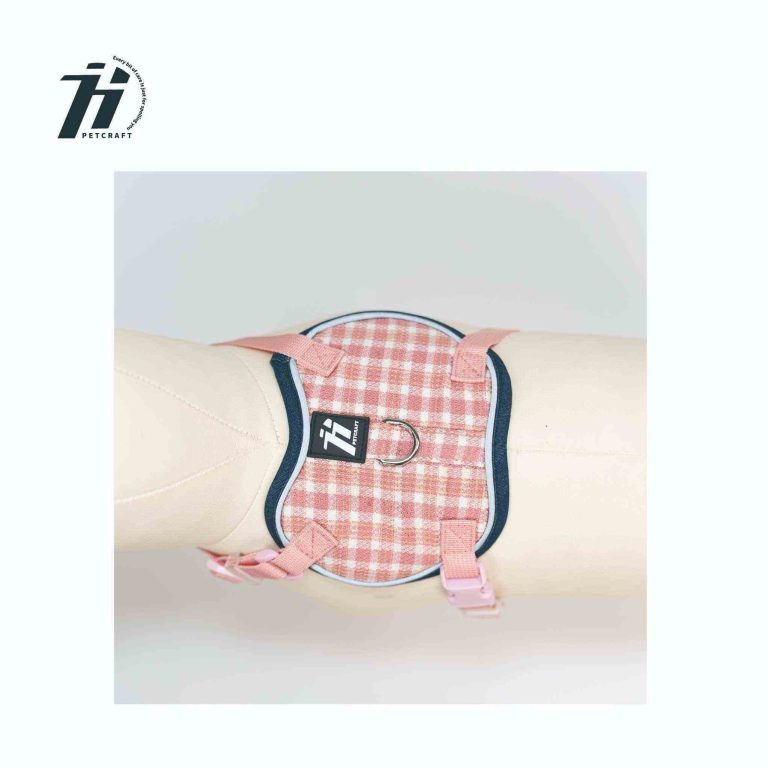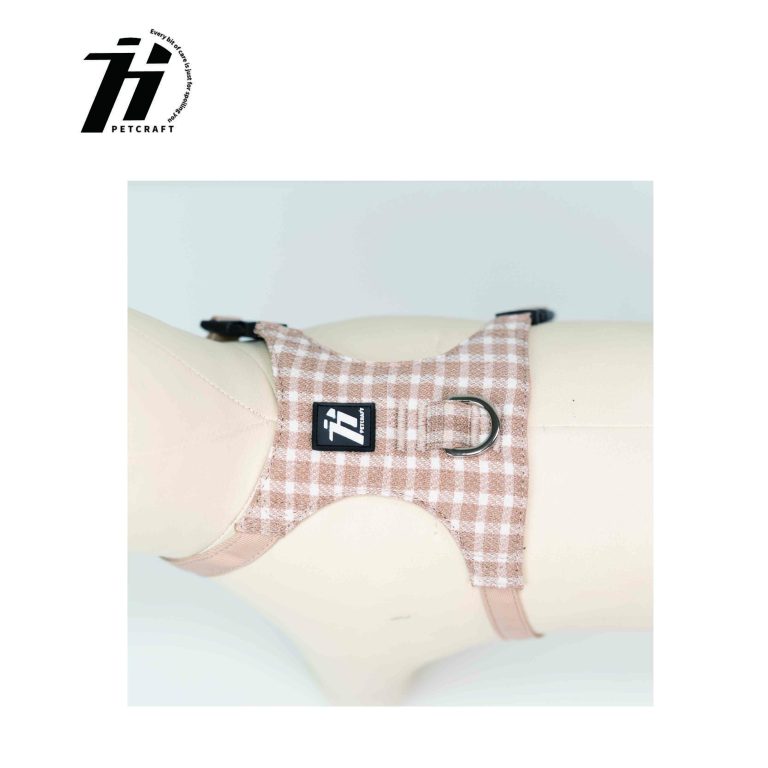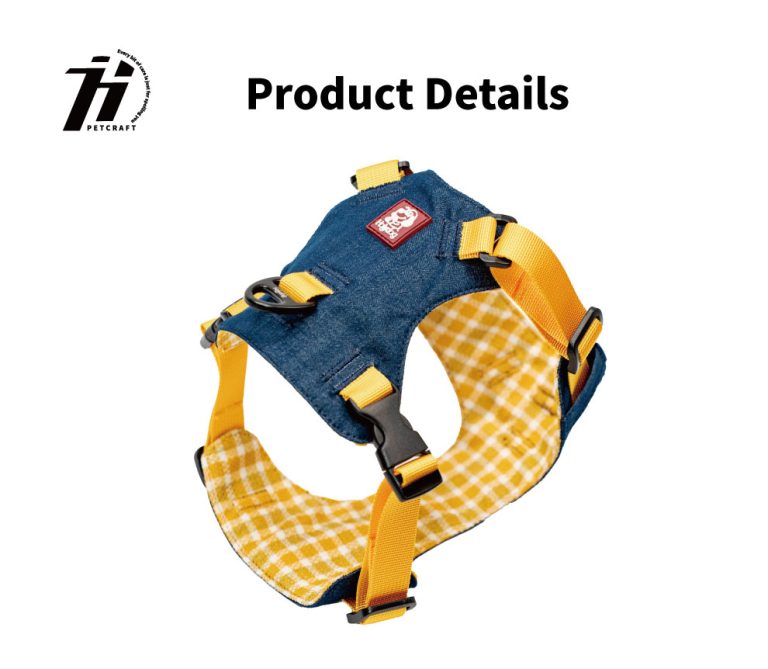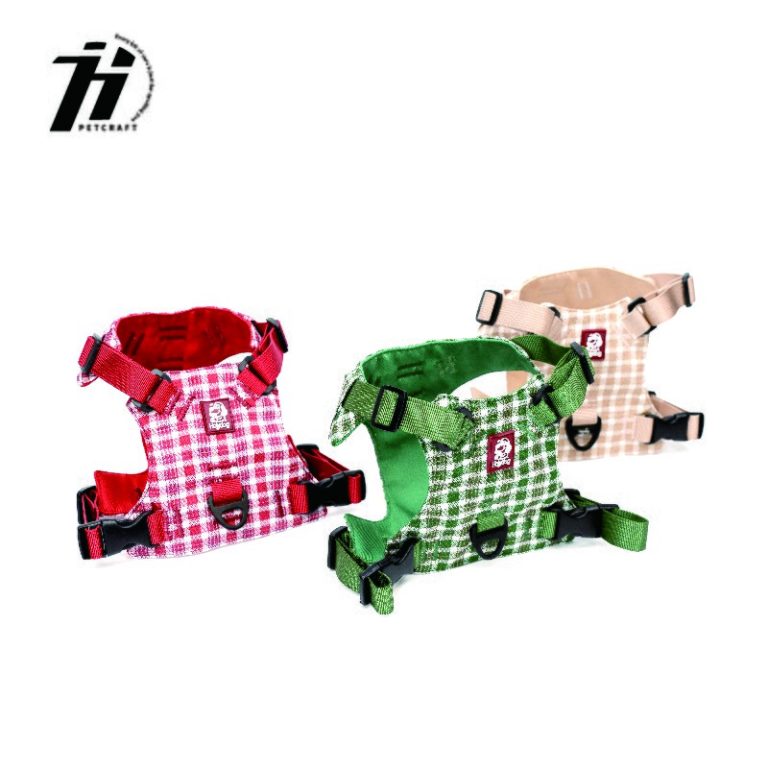
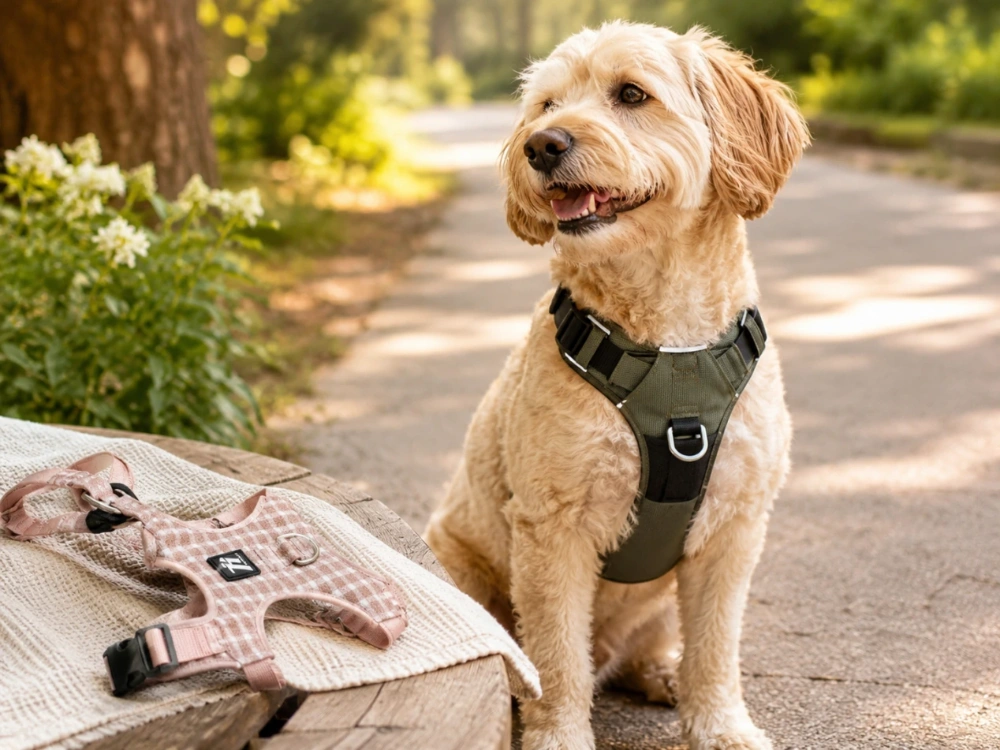
A harness can look perfectly straight when you leave home, then sit halfway toward one armpit ten minutes later. The back D-ring is often the easiest clue. If it begins over the spine and slowly drifts toward the ribs, the harness is rotating as the dog moves.
A dog harness usually slides sideways because one area is too loose, the left and right straps are uneven, leash tension is pulling it off-center, or the harness shape does not suit the dog’s body. Tightening every strap is not always the answer. First find where the movement begins. A small adjustment may solve it; if not, the harness itself may be a poor match.
Why Does a Dog Harness Slide Sideways?
Standing still does not test a harness very well. Once the dog begins walking, the shoulders move beneath the straps, the ribcage shifts with each stride, and the leash pulls from changing angles.
That is why a harness can pass a quick fit check at home and still twist during a normal walk.
Is One Area Looser Than the Rest?
Check the neck and chest separately.
Too much room around the neck lets the front section wander across the shoulders. A loose chest strap allows more of the harness to rotate around the ribcage. The same thing can happen when the two sides have been adjusted differently.
The difference may be small enough to miss by eye. Run your fingers along both sides and compare where the adjusters sit.
Holydog arnesi per cani regolabili uses adjustable webbing on both sides rather than relying on one fixed chest setting. The construction combines a high-density polyester outer layer with softer non-woven contact material, while POM adjustment buckles and alloy fastening components allow the fit to be changed without adding unnecessary bulk.
This matters when sideways movement comes from an uneven fit: the problem can be corrected at the loose section instead of simply tightening the whole harness.
Is the Leash Pulling the Harness Off-Center?
Leash direction matters too.
With a back attachment, much of the tension travels along the dog’s center line when the handler is behind the dog. A front clip dog harness receives force through the chest instead. If the front section is loose, a dog moving ahead can pull the whole structure toward one shoulder.
You may notice this only after the leash becomes tight.
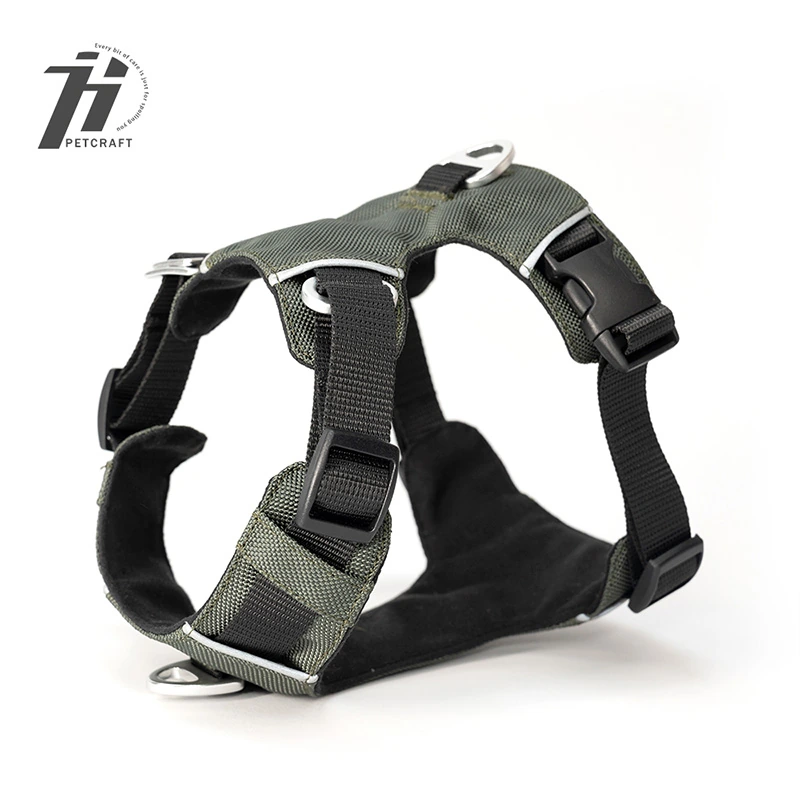
For that reason, Holydog uses front and back alloy D-rings on some harness structures. The front connection can support more directional control during pulling or training, while the back connection suits ordinary walking. The I-shaped body structure is intended to spread tension across the chest and back instead of concentrating it at one small point.
The benefit is not simply having two rings. A dual-attachment design is useful only when the body of the harness remains stable enough for each attachment point to stay where it was intended.
Can You Fix the Sliding Without Replacing the Harness?
Often, yes.
Take the harness off before adjusting it. Trying to correct a harness while it is already crooked makes it easy to tighten one side more than the other.
Put it back on from the beginning, with the dog standing naturally.
How Should You Reset the Fit?
Start with position rather than tightness.
Center the chest section first. Check that the back follows the spine and that none of the webbing has twisted near a buckle. Then adjust the neck and chest areas a little at a time.
Walk the dog for ten or twenty steps before making another change. Turn left, turn right, then apply light leash tension. Look at the back D-ring again.
If it remains close to the center, the adjustment is probably heading in the right direction.
A body-hugging harness should resist unnecessary twisting without squeezing the dog. Holydog’s multi-adjustment approach uses separate adjustment around the neck, chest and body areas on suitable designs, making it easier to correct one loose zone without over-tightening another.
Should You Rely on the Two-Finger Check?
It is useful, but it is only a starting point.
A dog vest harness can pass a finger check while the dog stands still and still move badly once the front legs start working. After adjusting it, watch the chest panel during the walk.
The straps should remain clear of the armpits. The dog should be able to extend both front legs normally, and one side should not become noticeably tighter after several minutes.
Check again when you get home. Flattened fur or a red line behind the same front leg can reveal a fit problem that was not obvious at the start of the walk.
Why Does the Harness Still Move After Tightening?
There is a point where further tightening stops being useful.
If the harness only stays centered when it is tight enough to affect shoulder movement, its basic shape may be the problem.
Does the Harness Match Your Dog’s Body Shape?
Chest girth is not the whole dog.
A Corgi and a French Bulldog may fall into a similar size range while having very different proportions. Deep-chested dogs often narrow sharply behind the ribs. Broad-shouldered dogs may need more room in front without extra movement around the body.
Coat thickness can make the problem harder to judge as well.
That is one reason Holydog offers different pet harness designs rather than one structure for every dog. Vest, saddle-style and more open adjustable constructions place straps and body panels differently.
The product range also covers different walking needs. Some designs focus on lightweight daily wear, while others use wider contact areas, reflective details, stronger hardware or greater adjustment for outdoor activity.
Can More Adjustment Help?
Sometimes.
Independent neck and chest adjustment can compensate for body proportions that do not fit neatly into a fixed-shape harness. It also lets you correct one loose area without tightening everything else.
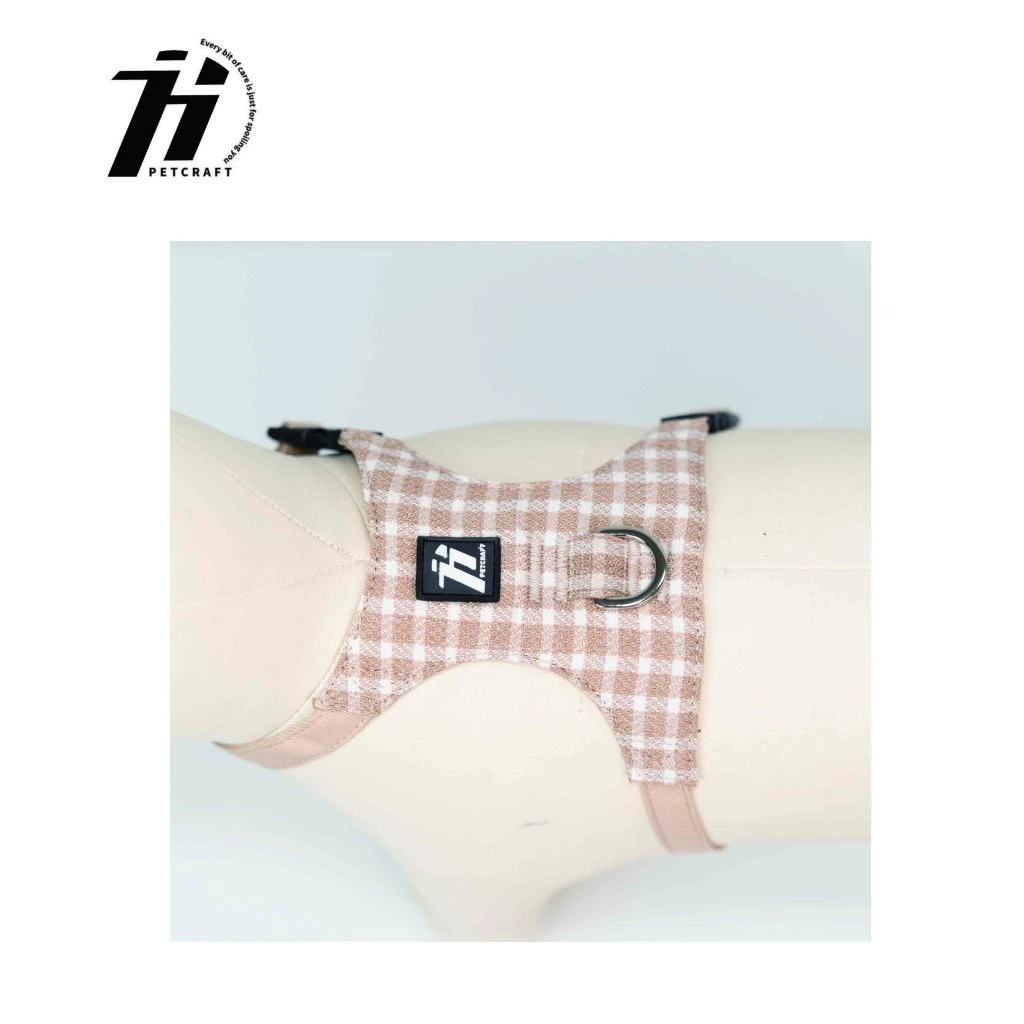
A multi-adjustable vest harness gives separate fitting control around the neck and chest. A softer inner layer helps reduce direct friction, while the outer polyester structure adds durability for repeated walking use.
This is where product construction becomes more important than simply choosing a smaller size. A strap can become shorter, but it cannot move a badly placed chest panel or change the basic distance between fixed connection points.
Can Sideways Sliding Cause Rubbing or Escape Gaps?
A small shift during a sharp turn is different from a harness that finishes almost every walk noticeably crooked.
Repeated movement changes where the straps touch the dog.
Why Does Rubbing Often Appear on One Side?
When the harness rotates, the strap on one side moves closer to the armpit.
Early signs are easy to miss:
- fur flattened in the same place;
- mild redness after walking;
- repeated scratching at the harness;
- one strap sitting closer to a front leg;
- a slightly shorter stride on that side.
Soft inner materials help reduce contact friction, which is one reason Holydog pairs wear-resistant outer fabrics with softer, breathable inner layers on suitable harness designs. That combination is more useful than simply making the whole product soft: the outer structure still needs to hold its shape while the inner surface remains comfortable against the dog.
Padding, however, cannot correct a harness that is sitting in the wrong place. If the same area rubs again and again, check the fit first.
Can a Crooked Harness Become Easier to Escape?
It can.
As one side moves closer to the body, the opposite shoulder may gain more space. A dog that suddenly backs away can then push a leg or shoulder toward that opening.
A secure harness therefore depends on more than buckle strength. Strap position, body coverage and adjustment range have to work together.
Holydog uses combinations of POM adjustment buckles and alloy load-bearing components across its harness range. Metal components on outdoor-oriented designs are also treated for better resistance to humid and rainy conditions. These details support durability, but they still rely on the harness being sized and adjusted correctly.
Why Can a No Pull Dog Harness Feel Inconsistent?
“No pull” does not mean the harness stops pulling by itself.
A no pull dog harness changes where leash force reaches the dog’s body. That only works consistently if the attachment point remains reasonably stable.
What Happens When the Front Ring Moves?
Picture the front ring sitting in the center of the chest. When the dog moves forward, leash tension can influence direction through that point.
Now picture the whole chest section sliding toward one shoulder each time the leash tightens. The response changes because the attachment point has moved with the harness.
That is why a dog harness for pulling should be tested under light leash tension after it has been adjusted. If it immediately twists to one side, solve the fit problem before judging the front attachment.
The I-beam structure used in Holydog’s more supportive harness construction is designed to spread leash force toward both sides of the chest and back. Combined with front and rear D-rings, this gives the same harness more than one useful walking configuration without relying on a single pull point.
A no pull dog harness still cannot replace leash training. A dog that spends an entire walk leaning into the leash will keep loading the equipment regardless of how carefully it has been fitted.
When Is It Time to Stop Adjusting?
Some problems point clearly toward adjustment. Others suggest the harness geometry itself is wrong.
| What Happens | Likely Cause | Better Next Step |
| Slight shift during a hard lunge | Sudden leash angle | Rebalance the straps |
| Harness is crooked before walking | Uneven adjustment | Reset from the start |
| Same armpit rubs every walk | Shape mismatch | Try another structure |
| Harness stays centered only when very tight | Poor geometry | Change harness style |
| Dog can back out easily | Excess shoulder space | Check coverage and size |
| Front tension rotates the whole harness | Low lateral stability | Recheck chest fit |
The most important warning is loss of normal movement.
If tightening stops the sliding but also shortens the dog’s stride or pushes material into the armpits, stop. A different dog vest harness or strap layout is usually more useful than continuing to tighten the current one.
Why Does Holydog Have an Advantage in Custom Harness Development?
Fit problems that appear during daily walks often begin much earlier, during product sizing and sample development. For private-label buyers, the useful question is not whether one sample looks good on one dog. It is whether the design stays stable across the intended size range.
Holydog combines product development with its own manufacturing capacity rather than treating customization as logo placement alone. The company has 21 years of manufacturing experience, more than 14,000 square meters across its main and branch factories, over 400 sewing machines and four production lines. A six-person design team, in-house laboratory and established quality system support development and production work.
The company also holds BSCI, SEDEX, ISO9001 and ISO14001 certifications and supplies products to international markets. For a harness project, those capabilities matter because strap position, stitching, hardware, materials and sizing may all need to be checked together rather than handled by separate suppliers.
What Should Brands Test Before Production?
During sample fitting, test more than one body shape where possible.
Look at:
- neck and chest adjustment range;
- front-leg clearance;
- left-right balance;
- chest-panel position after walking;
- stability under front and back leash tension;
- buckle operation;
- D-ring position;
- stitching around load points.
Holydog custom dog harness development supports changes to sizing, colors, logos and product details. The standard MOQ for customized pet products is 500 pieces, with sample orders typically taking about 7–10 days and bulk orders around 30–45 days depending on complexity.
This gives buyers a practical opportunity to correct fit before bulk production rather than discovering the same sideways-sliding complaint after products have reached the market.
If several sample dogs show the same movement, changing the size label alone is unlikely to solve it. Strap position, panel proportions or adjustment range may need to change.
Brands that already know their target dog size, use scenario or harness structure can discuss a custom harness project with Holydog before the specification is finalized.
Conclusione
If a dog harness starts straight and ends every walk under one armpit, do not tighten everything at once.
Center it again, check the neck and chest separately, balance both sides, then watch what happens while the dog walks and turns. The back D-ring is a useful reference: if it keeps drifting toward the ribs, something is still allowing the harness to rotate.
When careful adjustment solves the movement, there is no reason to replace the harness. When it only stays centered after becoming uncomfortably tight, body shape and harness geometry deserve more attention.
A stable front clip dog harness should not swing dramatically to one side under ordinary leash tension, while a dog harness for pulling should still leave the shoulders free for a normal stride. Sometimes the best fix is not another turn of the adjuster. It is a harness whose adjustment range and structure fit the dog better.
Domande frequenti
Q1: Why does my dog harness keep twisting to one side?
A1: Uneven straps, excess room, leash angle or a poor match with the dog’s body shape can cause it.
Q2: Should a dog harness move when my dog pulls?
A2: Slight movement can happen, but repeated or large sideways shifts usually point to a fit problem.
Q3: How tight should a no pull dog harness be?
A3: It should stay stable without restricting shoulder movement, normal breathing or the dog’s natural stride.