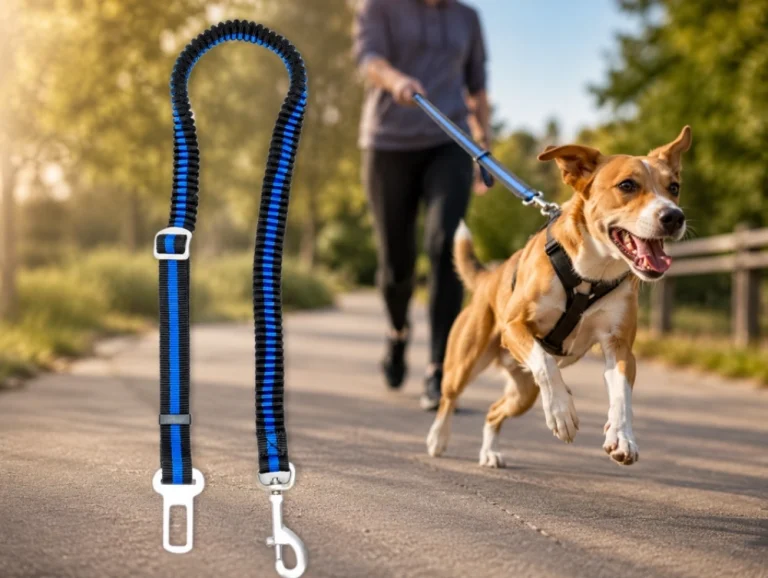
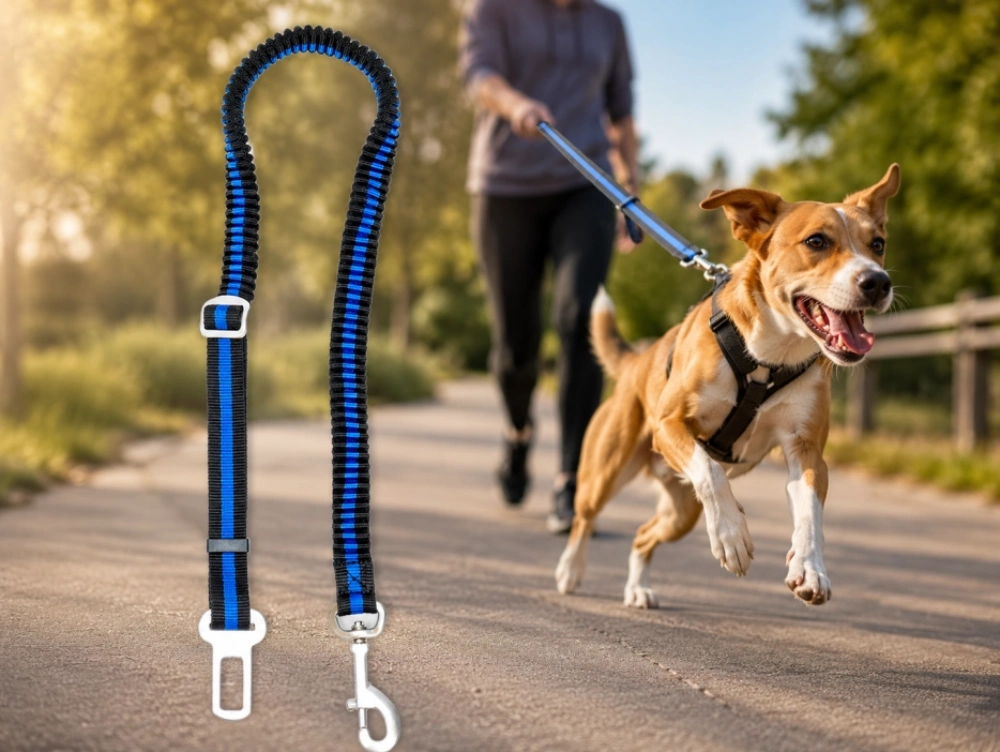
Ein Hund kann ruhig laufen und im Bruchteil einer Sekunde ans Ende der Leine reißen. Ein Eichhörnchen kreuzt den Weg, ein anderer Hund taucht um die Ecke auf oder ein Radfahrer fährt zu nah vorbei. Genau bei solchen plötzlichen Beschleunigungen spielt eine stoßdämpfende Leine ihre Stärken aus. Der elastische Teil gibt unter Belastung nach, anstatt Hund und Halter abrupt zum Stehen zu bringen.
Die schwierigere Frage ist, wie viel Nachgiebigkeit sinnvoll ist. Eine Bungee-Hundeleine, die sich zu weit dehnt, kann die Kontrolle erschweren. Eine, die sich kaum bewegt, dämpft einen plötzlichen Ausfallschritt möglicherweise nicht ausreichend ab, um den zusätzlichen Aufwand zu rechtfertigen. Der sinnvolle Dehnungsbereich hängt von der Ruhelänge, der maximalen Dehnung, der Größe des Hundes, seinem Zugverhalten und der Umgebung ab. Dehnung sollte als kontrollierte Bewegung und nicht als ein beliebiger Wert beurteilt werden.
Beginnen Sie mit der natürlichen Länge und der maximalen Länge.
Eine Prozentangabe allein ist leicht falsch zu interpretieren. Praktischer ist es, die Leine im Ruhezustand mit der Leine in maximaler Dehnung zu vergleichen. Diese beiden Messwerte zeigen, wie viel zusätzliche Länge zur Verfügung steht, wenn der Hund den elastischen Teil belastet.
Ist eine Leine im Ruhezustand 1,0 m und bei maximaler Dehnung 1,5 m lang, beträgt die zusätzliche Strecke 0,5 m. Das entspricht einer Steigerung um 50 %. Ein Dehnungsverhältnis von 1:1,5 beruht auf demselben Grundprinzip.
Holydog verwendet für seine Outdoor-Halsband- und Leinen-Kombinationen für aktive mittelgroße und große Hunde hochelastisches Polstergewebe mit einem Dehnungsverhältnis von bis zu 1:1,5. Das gleiche System kombiniert 1680D-Nylon-Gurtband in Tarnoptik mit Beschlägen aus einer Aluminiumlegierung. Ziel ist keine grenzenlose Dehnbarkeit, sondern eine kontrollierte Dämpfung bei plötzlichen Geschwindigkeitsänderungen des Hundes.
Warum „Bungee“ nicht genügend Informationen liefert
„Bungee“ bedeutet, dass sich die Leine dehnt. Wie weit, sagt sie nicht. Bei einer Zugleine ist dieser Unterschied wichtig, besonders in der Nähe von Bordsteinen, anderen Hunden, Café-Tischen oder schmalen Wegen. Sobald die Leine belastet ist, kann der Hund die zusätzliche Dehnung nutzen, bevor die Leine an ihre Grenzen stößt.
Holydog's D007 hochelastische Pufferleine Die Standardlänge beträgt 0,8 m, die maximale Länge 1,5 m, was einen zusätzlichen Verstellbereich von 0,7 m ergibt. Modell D009 beginnt bei 0,9 m und lässt sich auf 1,6 m ausziehen, was ebenfalls 0,7 m hinzufügt. Beide Modelle sind für Hunde bis 40 kg geeignet, unterscheiden sich jedoch in ihrer Ruhelänge.
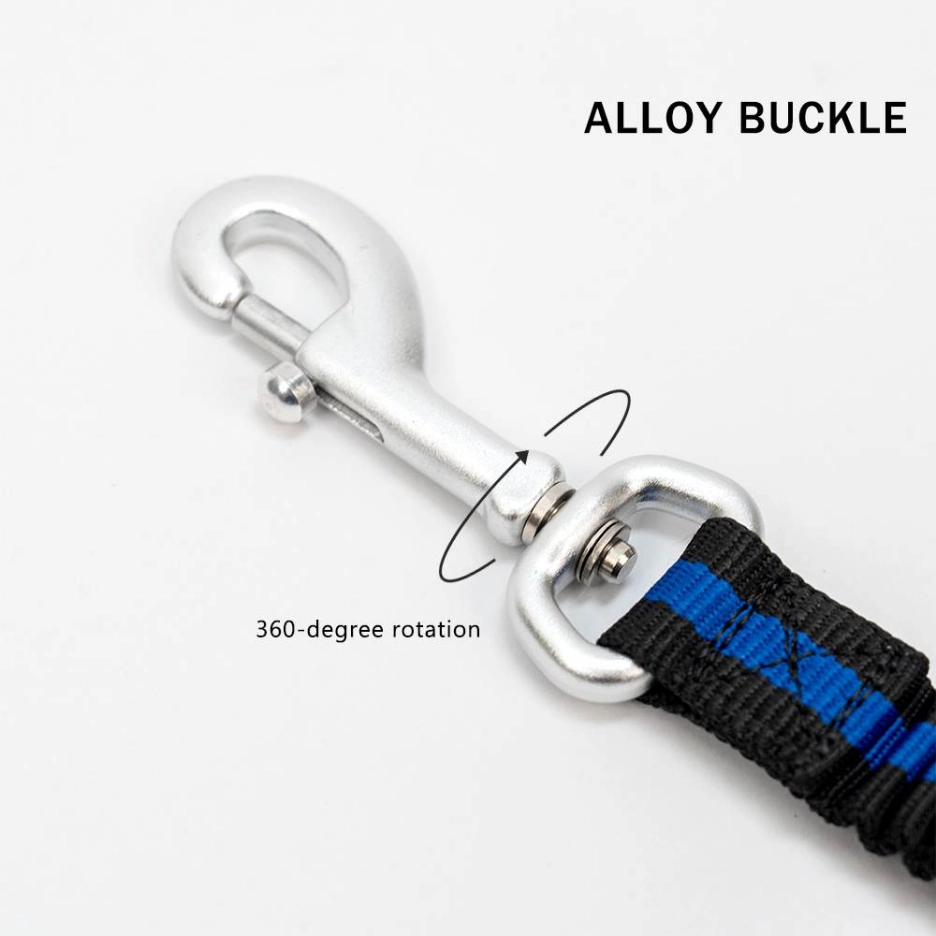
Diese Zahlen sind aussagekräftiger als die vage Behauptung einer „zusätzlichen Dehnbarkeit“. Sie zeigen auch, warum sich zwei Bungee-Hundeleinen unterschiedlich anfühlen können, selbst wenn ihr Gesamtweg ähnlich aussieht.
Wie viel Dehnung ist in verschiedenen Gehsituationen sinnvoll?
Es gibt keinen allgemeingültigen Prozentsatz für jede Strecke. Dieselbe Verlängerung von 0,7 m kann auf einem freien Weg sinnvoll erscheinen, neben dem Verkehr jedoch überflüssig. Bevor Sie sich für eine Strecke entscheiden, sollten Sie Folgendes beachten: stoßdämpfende LeineStellen Sie sich vor, wo der Hund tatsächlich läuft und wie oft die Leine straff wird.
Auch die Art des Ziehens ist wichtig. Ein plötzlicher Ruck belastet das System kurz und heftig. Gleichmäßiges Ziehen hält die Leine deutlich länger unter Spannung. Diese beiden Situationen sollten nicht als ein und dasselbe Produktproblem betrachtet werden.
Stark befahrene Straßen benötigen einen vorhersehbaren Arbeitsradius.
Auf Gehwegen, an Hauseingängen oder beim Warten auf eine Straßenüberquerung muss der Hundeführer seinen Hund oft nah bei sich haben. Hier ist die natürliche Leinenlänge ebenso wichtig wie die Elastizität. Eine kürzere Ruheleine mit deutlich eingeschränkter Nachgiebigkeit kann einen unerwarteten Ausfallschritt abfedern, ohne dass aus einem normalen Spaziergang ein weites Herumlaufen wird.
Die Leine sollte sich nach dem Absetzen der Last wieder in ihre Ruhelänge zurückziehen. Bleibt sie gestreckt oder fühlt sie sich nach wiederholtem Ziehen locker an, verliert der Hundeführer den vorhersehbaren Radius, der diese Konstruktion so nützlich macht.
Beim Stadtspaziergang lautet die Frage daher nicht: „Welche Leine dehnt sich am meisten?“ Eine bessere Frage ist, ob die Leine genügend Bewegungsfreiheit bietet, um das abrupte Gefühl eines Ausfallschritts zu reduzieren und gleichzeitig in einer für den Hundeführer kontrollierbaren Entfernung anzuhalten.
Offene Wanderwege vertragen mehr kontrollierte Zufuhr
Wanderwege, Parks und weitläufige Freiflächen ermöglichen mehr Bewegungsfreiheit. Eine Bungee-Hundeleine kann kleine Geschwindigkeitsänderungen abfedern, wenn der Hund vorläuft, langsamer wird oder auf etwas auf dem Weg reagiert.
Outdoor-Ausrüstung muss jedoch mehr als nur Dehnbarkeit aushalten. Das Outdoor-Leinensystem von Holydog besteht aus robustem 1680D-Nylon-Gurtband mit Tarnmuster, das Abnutzung, Schlamm und Nässe widersteht. Geschwärzte Zinklegierungskomponenten sorgen für Korrosionsbeständigkeit, während reflektierende Kanten die Sichtbarkeit bei schlechten Lichtverhältnissen verbessern.
Diese Details werden wichtig, sobald die Leine über den Boden geschleift, an Ästen gerieben, im Regen benutzt oder auf Spaziergängen am frühen Morgen und Abend mitgeführt wird. Elastizität ist zwar hilfreich, aber der Rest der Leine muss die Belastungen des Weges trotzdem aushalten.
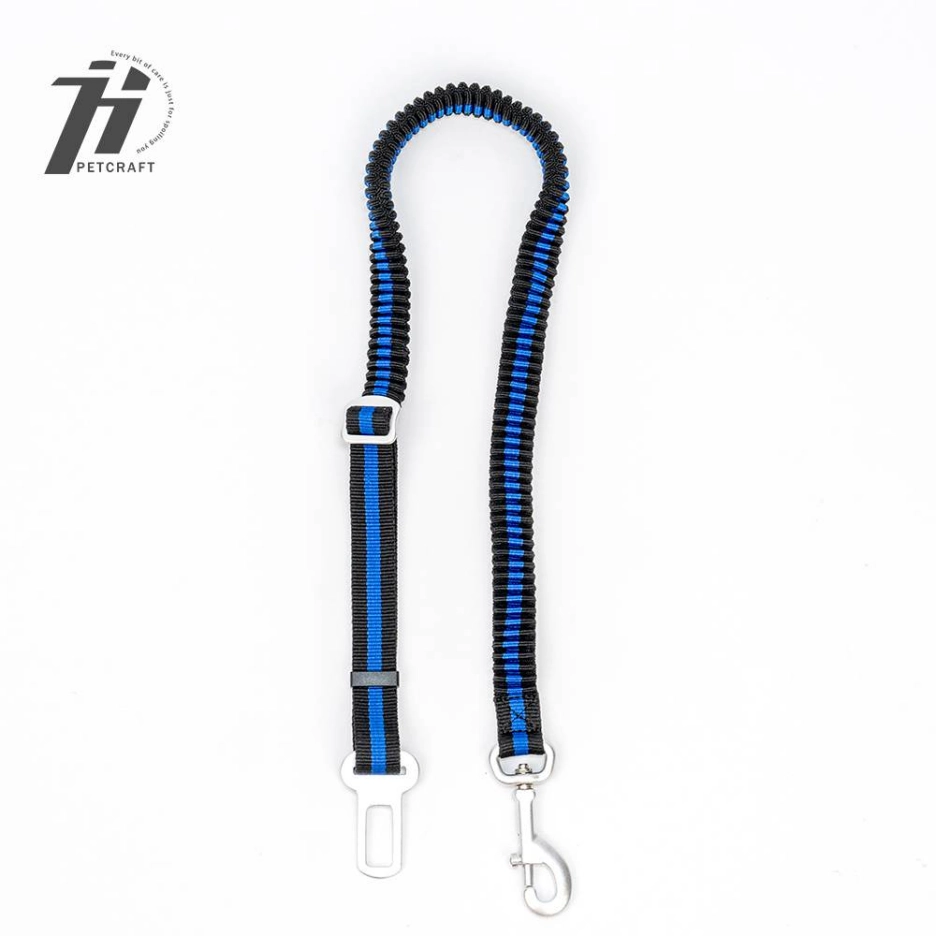
Mehr Dehnung bedeutet nicht automatisch bessere Zugkontrolle
Elastizität verändert die Art und Weise, wie eine plötzliche Belastung wirkt. Sie lehrt den Hund nicht, mit dem Ziehen aufzuhören.
Wenn der Hund während des größten Teils des Spaziergangs zieht, bleibt der elastische Teil der Leine möglicherweise einfach gedehnt. Der Hundeführer verliert dadurch einen Großteil der Dämpfung beim Übergang, da die Leine bereits unter ständiger Spannung steht. Eine zusätzliche Verlängerung der Leine löst dieses Problem nicht. Sie vergrößert lediglich die verfügbare Distanz.
Eine Zugleine sollte daher der Art des Zuges angepasst sein. Gelegentliche Ausfallschritte unterscheiden sich von einem Hund, der sich ständig an die Leine lehnt. Im ersten Fall kann eine Stoßdämpfung hilfreich sein. Im zweiten Fall sind weiterhin Training, geeignetes Zubehör und eine Arbeitslänge erforderlich, die den Hund gut kontrollierbar macht.
Dieser Unterschied ist besonders bei aktiven mittelgroßen und großen Hunden wichtig. Eine Leine kann den ersten Teil eines Ausbruchs abmildern, aber die endgültige Bewegung des Hundes wird dennoch durch Leine, Zubehör und Befestigungspunkt eingeschränkt.
Passe die gesamte Einrichtung an den Hund an
Die Kraft wird über den Clip auf das Halsband oder Geschirr übertragen. Bei aktiven Hunden muss das gesamte Führsystem auf die Größe des Hundes und den vorgesehenen Verwendungszweck abgestimmt sein.
Heimtierbedarf sollte nicht als Einheitsgröße betrachtet werden. Mittelgroße Hunde (ca. 10–30 kg) und große Hunde (über 30 kg) benötigen andere Komponenten als kleine Hunderassen. Ein kräftigerer Hund benötigt möglicherweise breitere Materialien und stabilere Verbindungen, während ein kleiner Hund durch unnötiges Gewicht der Ausrüstung belastet werden kann.
Dasselbe gilt für die Auswahl der Leine. Körpergewicht, Beschleunigung, Beschläge, Befestigungspunkt, Gehumgebung und das tatsächliche Verhalten sollten gemeinsam berücksichtigt werden. (Holydog's) Optionen für Hundeleinen Beinhaltet Optionen für verschiedene Gehkonfigurationen.
Überprüfen Sie auch die Beschläge, die Gurtbänder und den Griff.
Eine brauchbare Bungee-Hundeleine ist ein System. Gurtband, Nähte, Karabiner, Griff und der elastische Kern sind wiederholten Belastungszyklen ausgesetzt. Eine alleinige Fokussierung auf das Dehnungsverhältnis kann Schwachstellen an anderer Stelle verschleiern.
Die D009 stoßdämpfende Leine Es kombiniert ein hochelastisches Seil mit Schnallen aus Flugzeugaluminium und integrierten Reflexlinien. Die veröffentlichten Spezifikationen geben eine natürliche Länge von 0,9 m, eine maximale Länge von 1,6 m, eine Stoffbreite von 2,5 cm und eine Tragfähigkeit bis zu 40 kg an.
Auch der Griff spielt eine Rolle. Selbst mit elastischer Polsterung wirkt über den Griff eine Kraft auf den Träger. Eine breitere oder gepolsterte Kontaktfläche kann sich bei längeren Spaziergängen stabiler anfühlen als eine schmale, harte Schlaufe. Die Nähte am Griff und die Übergänge zwischen Beschlägen sollten ebenfalls regelmäßig überprüft werden, da diese Bereiche sich wiederholt biegen und belasten.
Bei Produkten, die gemäß den chinesischen Sicherheitsanforderungen für Heimtierprodukte GB/T 43839-2024 bewertet werden, gehen die mechanischen Eigenschaften über die Zugfestigkeit hinaus. Metallkomponenten müssen korrosionsbeständig sein, freiliegende Kanten dürfen keine scharfen Verletzungen verursachen, und Textil- oder Lederkomponenten müssen farbecht sein. Eine klare Produktkennzeichnung und Informationen zur sicheren Anwendung sind ebenfalls Bestandteil einer sorgfältigen Produktprüfung.
Das ist ein hilfreicher Kontext für Käufer, denn die Angabe der Dehnbarkeit allein sagt nur einen Teil der Wahrheit aus. Ein elastischer Abschnitt mit einer Dehnung von 1:1,5 ist wenig wert, wenn das Verbindungsstück, die Naht oder das umgebende Material die Schwachstelle des Systems darstellt.
Ein einfacher Dehnungstest vor dem Kauf
- Notieren Sie die natürliche Länge. Dies ist die Strecke, die Sie den größten Teil des Weges zurücklegen werden.
- Notieren Sie die maximale Auszugslänge. Subtrahieren Sie die natürliche Länge, um den tatsächlichen zusätzlichen Hub zu ermitteln.
- Achten Sie auf den Gewichtsbereich für Ihren Hund. Gehen Sie nicht davon aus, dass eine größer aussehende Leine automatisch für einen größeren Hund geeignet ist.
- Schauen Sie sich die Route an. Auf stark befahrenen Straßen ist in der Regel eine strengere Verkehrsüberwachung erforderlich als auf offenen Wegen.
- Überprüfen Sie die Beschläge und Nähte. Der elastische Kern kann eine schwache Klammer oder eine mangelhaft verstärkte Verbindung nicht ausgleichen.
- Überlegen Sie sich Ihre Zugtechnik. Eine stoßdämpfende Leine ist bei plötzlichen, kraftvollen Zügen nützlicher als bei konstantem Zug.
- Überprüfen Sie die Rückstellkraft. Die Leine sollte nach dem Ausstrecken wieder in ihre normale Länge zurückkehren.
Dadurch wird eine allgemeine Behauptung über Bungee-Segelseile messbar. Außerdem erleichtert es Vergleiche für Tierhalter, Einzelhändler und Eigenmarkenkäufer.
Was sollten Markenhersteller für Heimtierbedarf bei der Entwicklung einer maßgefertigten, stoßdämpfenden Leine spezifizieren?
Für Marken sollte der Dehnbarkeitsbereich im Produktbriefing detailliert beschrieben werden und nicht nur als Eindruck aus dem Musterraum dienen. Natürliche Länge, maximale Dehnung, Zielgewicht des Hundes, Gurtbandbreite, Beschläge, Griffkonstruktion, reflektierende Details, Logoposition und Verpackung sollten vor Produktionsbeginn klar definiert sein.
Holydog unterstützt OEM/ODM Anpassung Für Hundeleinen, Halsbänder, Geschirre und Spielzeug. Sonderanfertigungen umfassen Logo- und Farbänderungen, Accessoires und individuelle Größen. Die Mustererstellung dauert in der Regel 7–10 Tage, die Serienproduktion je nach Komplexität üblicherweise 30–45 Tage.
Diese Probephase ist der richtige Zeitpunkt, um zu überprüfen, ob sich das reale Produkt wie in der Spezifikation beschrieben verhält.
Prüfen Sie nicht nur mit einem Maßband. Dehnen Sie die Probe wiederholt bis zur angegebenen Belastungsgrenze. Prüfen Sie, ob der elastische Teil gleichmäßig in seine ursprüngliche Form zurückkehrt. Drehen Sie den Clip während der Bewegung, prüfen Sie die Nähte in stark beanspruchten Bereichen und vergleichen Sie das Gefühl nach wiederholter Dehnung.
Wenn eine Marke mehrere Leinenlängen herstellt, muss der gleiche Verlängerungsprozentsatz nicht einfach für jede einzelne Leine übernommen werden. Eine kleinere Alltagsleine und eine robustere Leine für aktive mittelgroße oder große Hunde benötigen möglicherweise unterschiedliche Ruhelängen, Gurtbandabmessungen und Beschläge. Sobald diese Punkte festgelegt sind, können die Teams… Projektanforderungen teilen zur Überprüfung.
Schlussfolgerung
Die richtige Dehnung reicht aus, um eine plötzliche Spannungsänderung abzufedern, ohne dem Hund mehr Arbeitsdistanz zu geben, als die Situation angenehm bewältigen kann. stoßdämpfende Leine Die Beurteilung sollte daher anhand der natürlichen Länge und der maximalen Ausdehnung erfolgen, nicht anhand des Wortes „Bungee“ oder allein anhand der maximalen Länge.
Eine Bungee-Hundeleine ist besonders sinnvoll, wenn der Zug nur kurzzeitig erfolgt. Auf stark befahrenen Straßen sollte der Aktionsradius berechenbar sein. Auf freien Wegen kann eine etwas kontrolliertere Nachgiebigkeit natürlicher wirken. In jedem Fall spielen die Beschläge, das Gurtband, die Griffkonstruktion, die Größe des Hundes und der Befestigungspunkt eine wichtige Rolle.
Wenn der Hund an der Leine zieht und diese während des gesamten Spaziergangs gespannt bleibt, ist mehr Elastizität wahrscheinlich nicht die Lösung. Besser geeignet ist eine Leine, deren Dehnbarkeit, Kontrollierdistanz und allgemeine Konstruktion zum Hund und dem jeweiligen Spaziergangsort passen.
Häufig gestellte Fragen
Frage 1: Ist eine Bungee-Hundeleine für Hunde geeignet, die zum Ausfallschritt neigen?
A1: Ja. Kontrolliertes Dehnen kann eine plötzliche Belastung abfedern, ersetzt aber nicht das Leinentraining.
Frage 2: Wie berechne ich die Dehnung einer stoßdämpfenden Leine?
A2: Subtrahiert man die natürliche Länge von der maximal ausziehbaren Länge, erhält man den zusätzlich verfügbaren Leinenweg.
Frage 3: Ist eine dehnbare Hundeleine beim Ziehen besser?
A3: Nein. Zu viel Auszug kann die Kontrolle über das Fahrzeug beeinträchtigen, insbesondere auf stark befahrenen Straßen oder in der Nähe von viel Verkehr.