A puppy collar and leash should fit the puppy today, not next week. While growth room is important, that growth room should come from a useable adjustment range, not from a collar and leash that currently are loose on the puppy and will grow with him.
In the short time frame of a few weeks, the little balls of fluff can change so quickly. The neck of a puppy increases in circumference, the coat becomes thicker, the puppy’s pulling force increases and the quiet little follower of man that used to follow at your feet now runs ahead of you wanting to investigate every smell on your daily route. Although a collar can still break, it can be almost at the end of its useful life. And a leash that still looks almost new can no longer be of a suitable proportion to the dog using it.
Growth checks are more useful than searching for a single puppy collar and leash that will last the puppy’s entire growth stage.
How should buyers measure and select the current collar size?
Start by taking the neck measurement of the puppy in its current body form, not in predicted adult form. Take the first measurement and then re-measure the collar after the puppy has moved about a bit.
While a puppy collar size chart can provide a useful range of sizes, it won’t necessarily provide information about the unique construction of an individual dog.
Hold the collar at the natural wearing position and fasten. There should be about one to two fingers worth of space between the collar and the neck. Now let the puppy drop its head, turn, sniff, sit and walk about. The collar should stay put and not become loose in one position and tight in another.
Even within a breed of similar age, two puppies can require different settings. The coat, neck formation and body conformation of a puppy all vary and require different collar settings.
A puppy collar size chart should provide a range of sizes rather than rely on owners to categorize their puppy as ‘small puppy’ or ‘medium puppy’ etc.
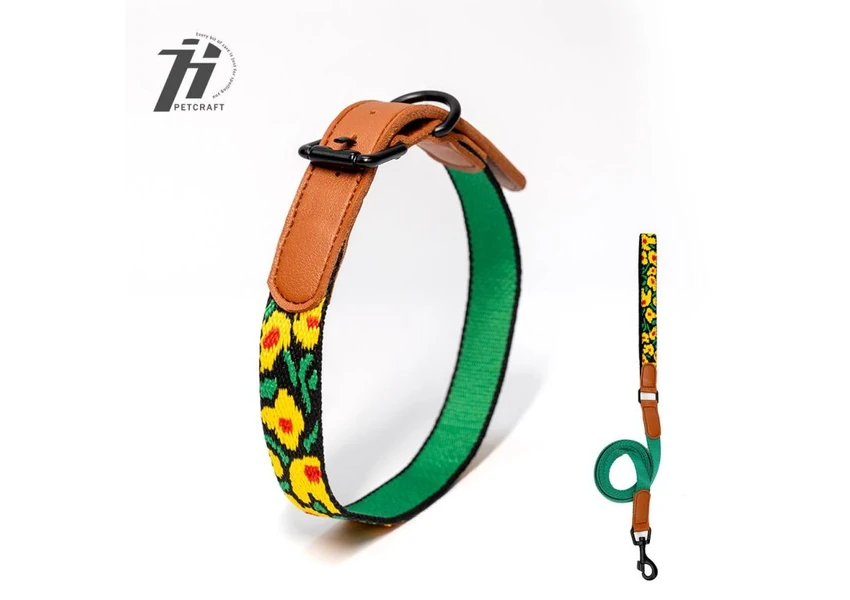
Later in the buying process, a real product makes those ranges easier to judge. The E001 collar and leash set is available in S for 20–35 cm neck girth, M for 30–50 cm, and L for 40–65 cm. Its matching leash is 1.5 m long, giving buyers a concrete size range to compare with an actual neck measurement.
How should an adjustable puppy collar accommodate growth?
An adjustable puppy collar is good when the amount of usable adjustment does not change as the puppy grows.
When resizing the buckle should still sit nicely, the D-ring should be accessible, and the excess strap shouldn’t end up being so long that it flops about while walking. The fact that the collar still closes is not sufficient to mean that it is fitting well.
An adjustable puppy collar means that for the smaller changes that happen before you know it, a thicker coat in winter or a stripy seasonal pattern to the coat can mean that need to be adjusted. On the other hand, grooming can make your puppy’s neck seem thinner, and fast growing puppies will need only a small increase in size this week and then need a whole new size a few weeks later.
One of the simplest routines is to measure, adjust, move the dog and then check again. Most changes in size develop gradually and the useful signs don’t appear overnight.
Check where the collar is now in relation to the collar’s adjustment range.
If there is plenty of range left in the neck and collar sits well then a small adjustment may resolve the issue. However, if the setting continues to move to the end of the current setting then moving to the next setting will provide more room for growth and reposition the hardware to a more useful location on the neck.
An oversized collar is not a shortcut though. An extra large starting point would mean that the collar can move around your dog’s neck, the D-ring could move to an unpredictable point and therefore make leash handling very unpredictable. Allowance for growth is better implemented through adjustability within a correctly chosen size.
As owners compare constructions within our range of pet collars from Holydog Group, they can see details of the adjustments, buckle style, lining, rings and collar width rather than just colour.
The neck measurement is only one signal.
You should also see how much the collar turns around your puppy’s neck. If your puppy pulls, will the collar end up higher on the neck or lower? Will the buckle end up in a weird position after another adjustment? Also, take a look at your puppy’s skin and coat after a walk to see if the collar has gotten tighter than you intended.
Performing these checks is even more important when your company is growing quickly. If you wait until your customers’ collars are too small to wear comfortably, you won’t have enough time to switch them to the correct size.
A puppy collar size chart gives you an idea of the sizes available but it’s the puppy itself that tells you when the current collar size is getting too small.
How should leash training equipment change as the puppy grows?
While the growth of the puppy’s neck is of greatest interest when changing the collar to the next size, the needs of puppy leash training change as well with regard to the leash.
A young puppy may only have learned a few things in that short space of time – wearing the equipment comfortably, following you, stopping for you and being able to cope with light tension on the lead. By months later that dog may be moving at a fast pace, pulling on the lead, and responding to many more distractions.
When training a young puppy to wear a leash it is best to keep a simple, manageable system in place.
The leash should be easily held by the handler, connected to the collar without problem from oversized clips, and allow for small turns without the heavy clip of the leash hitting against the collar.
For puppy training, the best collar and leash are simple. A secure fit, manageable weight, a clear D-ring connection and predictable handling are more important than lots of complicated features.
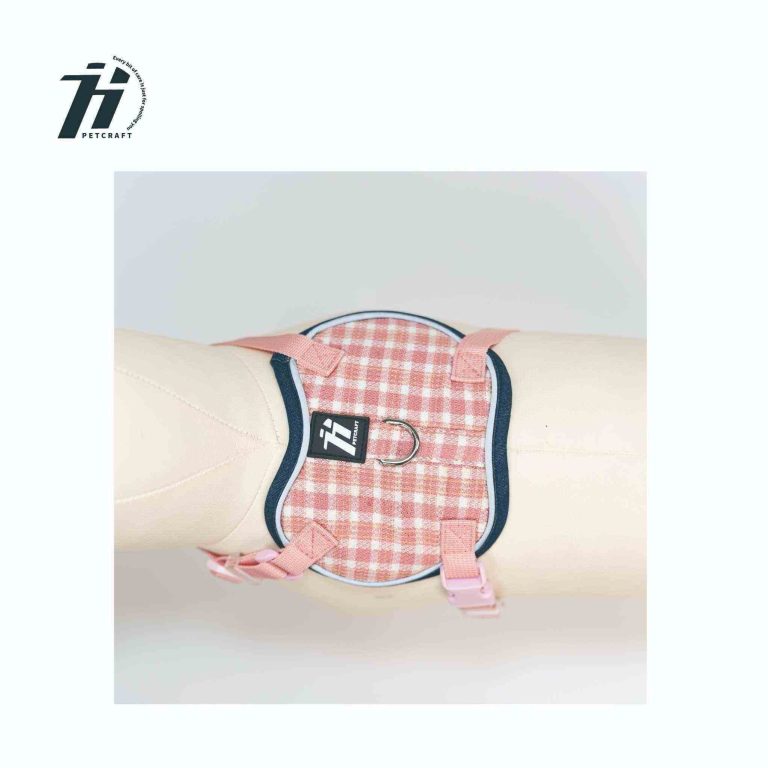
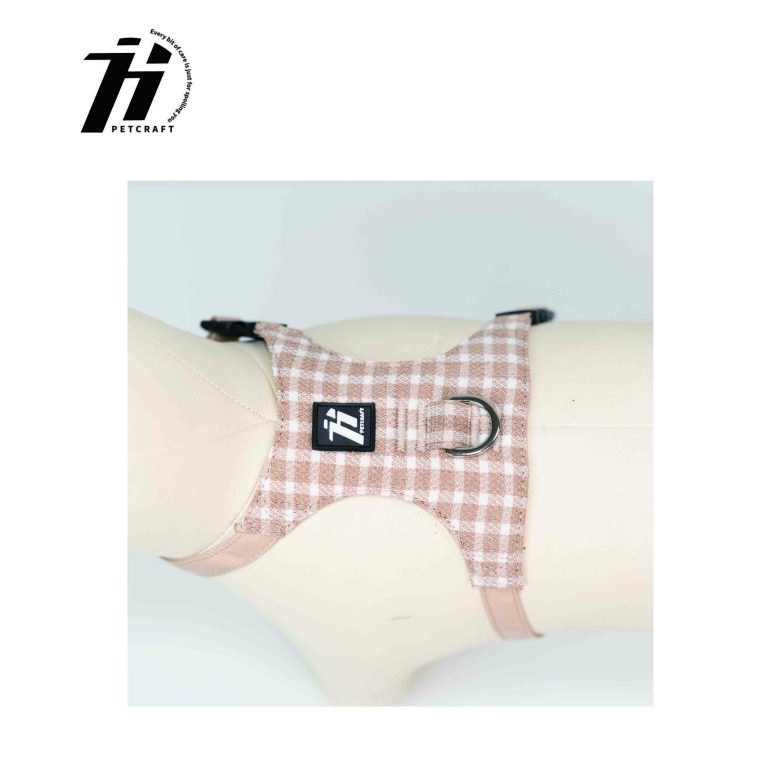
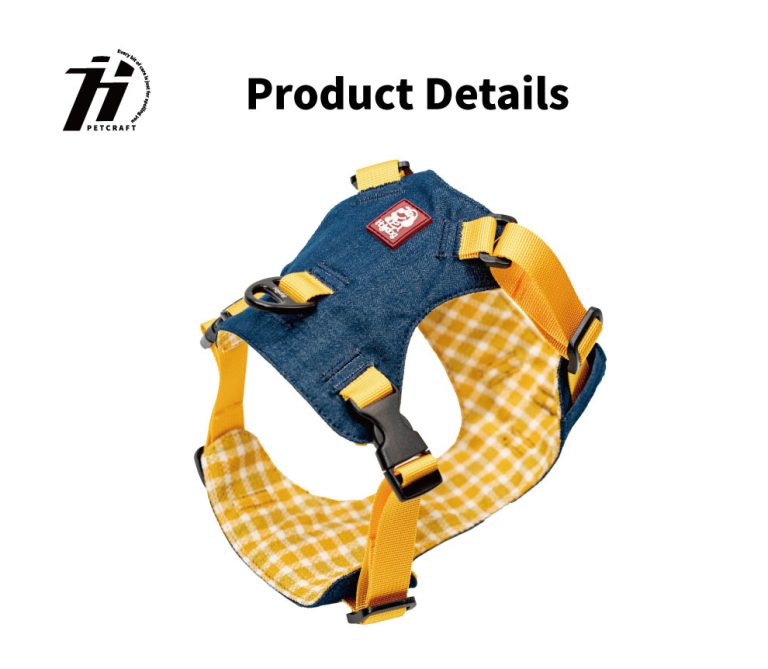
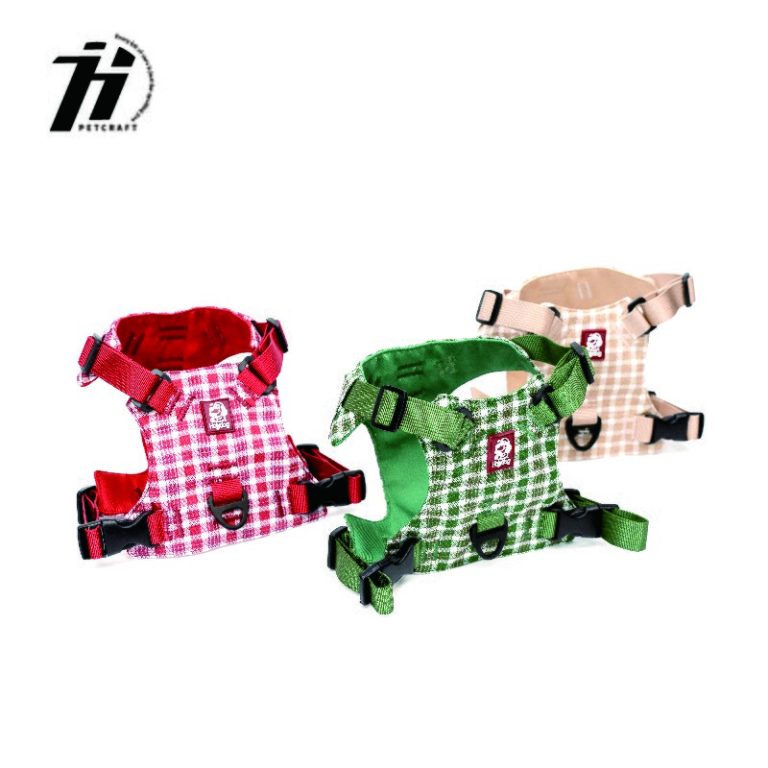
E001 set: Strong polyester printed outer layer combined with a soft inner layer of breathable material. Collar and leash run in same direction. A D-ring serves as the designated leash connection point. The length of the leash is 1.5 m.
By combining collar and leash into one walking system it’s easier to judge them.
The job that your hardware is supposed to do will change as a result of the pulling strength.
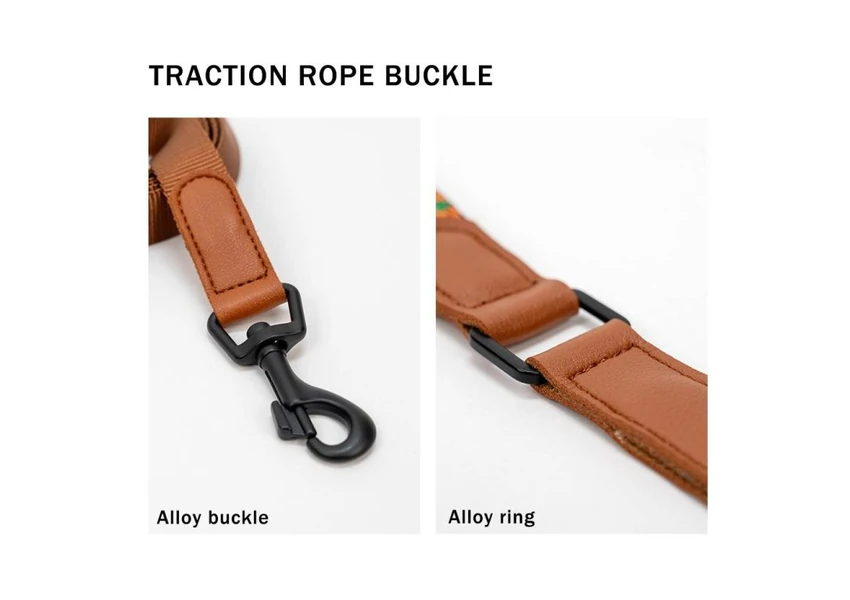
Follow the load path from the hand, through the leash handle, leash body, leash hook, collar D-ring, collar buckle, leash strap and finally get it to sit on the neck properly. A puppy that has grown significantly can alter the way each part of the leash behaves even if no part appears to have been damaged.
An example for this would be a leash clip that to the eye of the owner of a smaller dog looks of a proper size. But compared to a larger dog it suddenly looks tiny. A collar might twist sharply at the D-ring when put under enough tension. A light leash that was perfect for short indoor training sessions is not sufficient for longer walks around the neighborhood.
The best collar and leash for puppy training can change without the training itself going wrong. In other words, as long as the training is progressing well, the equipment can change too as the dog grows.
A growing dog does not change in one dimension.
A puppy grows in strength but can stay within the same collar size.
On a real walk, more confidence means more forward movement, more fast turns, and more reaction to people, other dogs, cars, etc. Even though the collar may still fit, the feel of the leash in your hands is different.
During puppy leash training, review four things together:
- current neck measurement;
- remaining collar adjustment;
- leash and hardware proportion;
- current walking behavior.
A change in any of these may require a re-inspection of parts of the setup. However, the change does not necessarily mean that the whole set has to be replaced, rather it identifies a point that needs to be inspected.
Changes in a cat’s coat can be difficult to recognize because they occur so slowly.
An extra adjustment might be needed for a puppy with a fuller winter coat. A good grooming session to strip out excess fur could create a bit of extra room. A puppy that has been having short training sessions might now be going out for longer more general walks. The collar has more time to move around and rub, or to be bearing the weight of the leash.
So a fitting check has to be done in normal use, not just when your puppy is standing still in the house.
An adjustable puppy collar should allow for normal growth, while keeping all hardware in sensible places.
How should brands plan coordinated collar and leash ranges?
For retailers and private-label brands, puppy growth presents a product development problem as well as a sizing problem.
Having useful ranges of sizes involves more than just having different colors. The neck ranges, the adjustment length, the collar width, the buckle sizes, the D-ring positions, the lining, the leash lengths, and the clip sizes all affect how easily one can size up from one stage of the collars to the next. Each size should have a clear job.
The customer needs to be able to see where one neck range finishes off and another begins. Measurement information should be consistent throughout the range. Hardware should look proportional and feel right rather than just being copied because it is used on other similar products in the range.
When purchasing a coordinated set, check the collar and leash together. Matching colors are a nice feature but check for clean connection of leash hook, accessibility of D-rings at various settings and that entire set will fit the correct size dog.
We provide OEM/ODM customization service for pet collars, leashes, pet harnesses and other related products. Customization options include logo printing, colors, add-on functions and custom sizes, etc. Sample will be ready in 7-10 working days, and production time for bulk orders is 30-45 working days depending on products’ complexity.
What should buyers verify before approving a custom set?
Don’t approve adjustable products only when they look their best.
Test the collar at various points within the intended use range. Open and shut the buckle several times. Attach the leash to test movement in both directions. Observe the D-ring and strap to check for any wear. Check the inside of the collar for smoothness and that it still looks neat when working at the tighter end of the range.
The main and branch factories of Holydog cover an area of more than 14,000 square meters, containing a 2,000 square meters warehouse on site, 400+ sewing machines, and 4 production lines. With 160 employees, 6 designers, a testing laboratory and a complete quality control system, Holydog obtained the certificates of BSCI, SEDEX, ISO9001 and ISO14001.
These projects typically have multiple sizes, matching leash options, repeat sampling, and consistent reorder details. Brands with fixed neck sizes, set material options, established color options, and fixed leash requirements can present a project brief to be reviewed by Holydog before sampling.
FAQs
Q1: How often should you check the size of a puppy’s collar?
A1: Check for fit on a growing pup often and take new neck measurements at the new adjustment point. If the pup’s finger space is getting smaller, the collar is not sitting straight, or you’re nearing the end of the range of settings for that collar, refer to the puppy collar size chart and choose the next size or make the next adjustment as needed.
Q2: Is an adjustable puppy collar better for a growing dog?
A2: An adjustable puppy collar is useful. The collar needs to be able to go up with the puppy’s neck, and with coat. This type of collar is most useful when the collar is already the correct size for your puppy’s starting neck measurement and you have some room to adjust as your puppy grows rather than starting with a very loose collar to allow for growth.
Q3: What is the best collar and leash for puppy training?
A3: Best collar/leash for puppy training is one that fits well and has appropriate sized hardware. This should also be easy for the owner to use. As the puppy progresses in the leash training, check the leash clip, D-ring, collar fit as well as puppy’s growing strength instead of only looking at age.