Dog harness sizing requires more than a simple weight band and three size names. For a private label range, neck and chest measurements should be verified and the harness adjusted to its full potential on sample dogs. Customers must also be instructed on how to fit the harness and this information approved alongside the sample.
There are some very difficult cases along the edges. For example, a dog may be within the chest dimension of a given size but outside of the neck dimension. A padded panel can behave quite differently than an unrestrained one, depending on leash attachment points. These problems need to be uncovered prior to packaging up the preliminary chart as a ‘promise to the customer’ in the finished product.
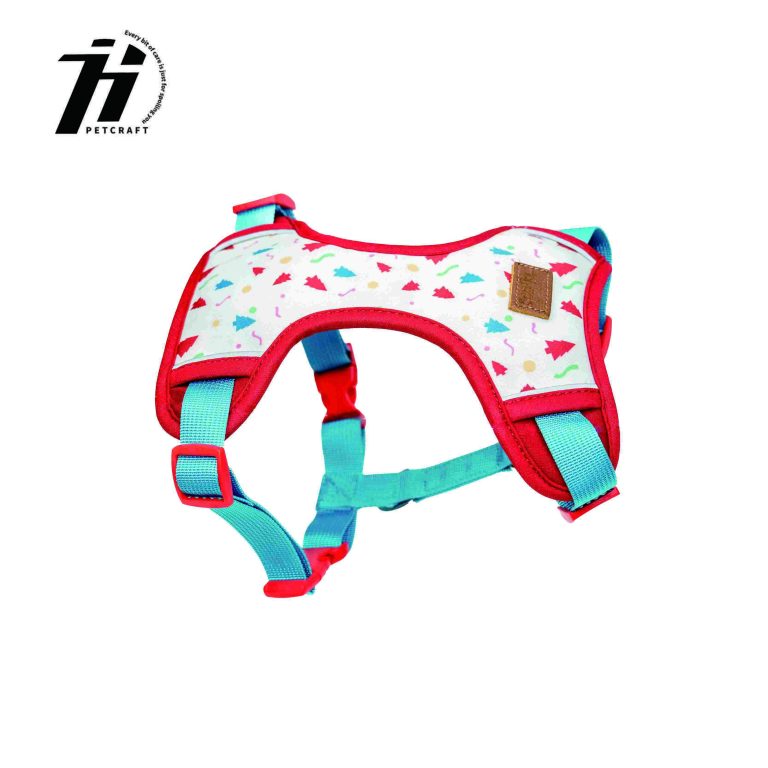
Holydog’s existing collection of pet harnesses can be used as a starting point for a new branded range. The I-beam harnesses that the company already specifies have an adjustable body and front and back attachment points. This means customers can see how a harness will fit a pet and what it is intended to be used for, before making a purchase, as opposed to just choosing a harness on the basis of appearance.
Why Can a Correct Chest Measurement Still Produce a Poor Fit?
The circumference of a strap alone does not tell you if it will close around your body, but the chart above gives you a first filter. The real test of a given measurement is a wear trial.
Check Both Measurements on the Same Dog
Take measurements at the widest point of the chest and note the neck circumference using the same method and position as stated in the product’s measuring instructions. It is vital that all team members use the same method of measuring to ensure any changes to the chart appear in the product not just the new chart.
Range for specified Holydog I-beam harness:
• S: neck 37–48 cm; chest 48–59 cm.
• M: neck 44–61 cm; chest 56–75 cm.
• L: neck 48–67 cm; chest 67–89 cm.
The measurements shown belong to this construction only. They must not be transferred to other harnesses in the catalog. Holydog identifies a manual measurement tolerance of 1–2 cm. This must also be noted in sample check and clearly indicated where the size chart requires it.
Treat Overlap as a Decision Point
We have a hypothetical dog with a neck measurement of 46cm and a girth measurement of 58cm. These measurements fall within the S and M sizes as detailed on the size chart above. The size chart cannot determine which is better – you must look at where the panels sit, how much further you can adjust it, how secure the straps are and how much room your dog has to move about.
Do not ever say “always size up” as if that were a solved problem. A bigger neck opening might introduce other problems. If neither of the standard sizes fit well, treat that as an exception to normal fitting or a design flaw that needs to be fixed, rather than a reason to cinch up the straps past their intended length.
What Should a Private Label Dog Harness Sample Prove?
Test a sample with the intended users on similar walking routes. A static fit test is helpful but the product must also stay in place when the dog turns etc. or when the handler alters the attachment points.
Test the Structure and Adjustment Together
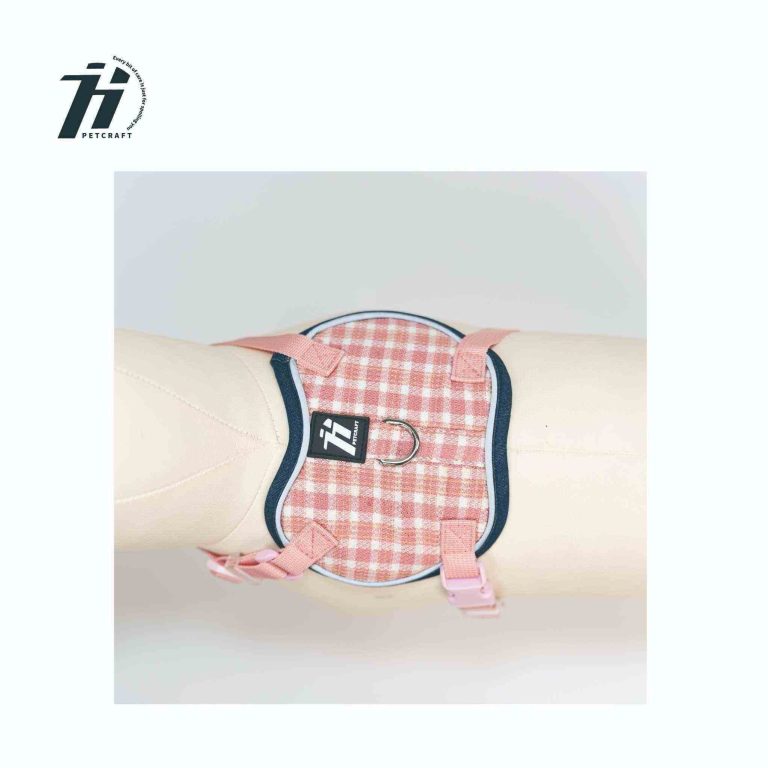
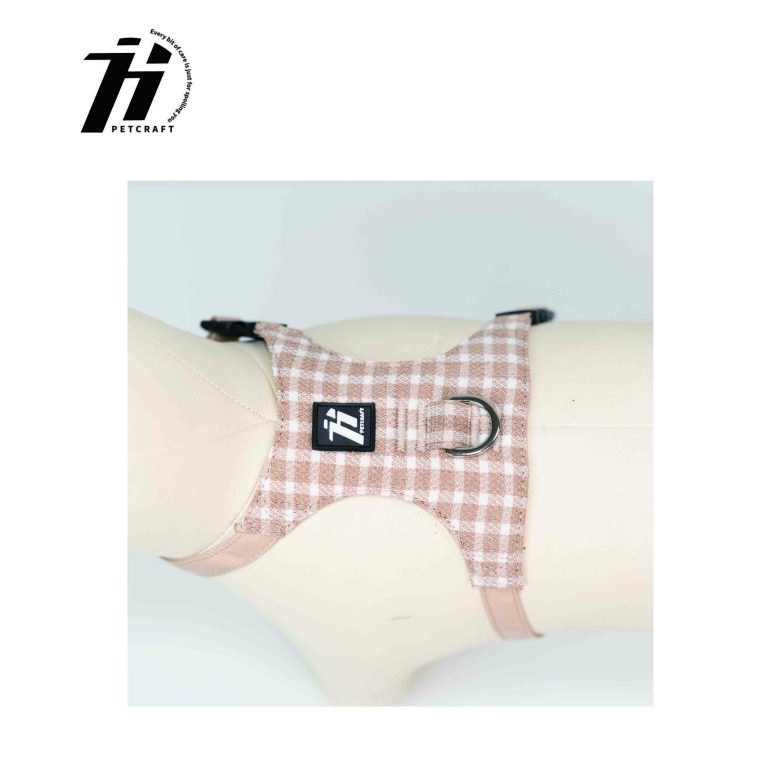
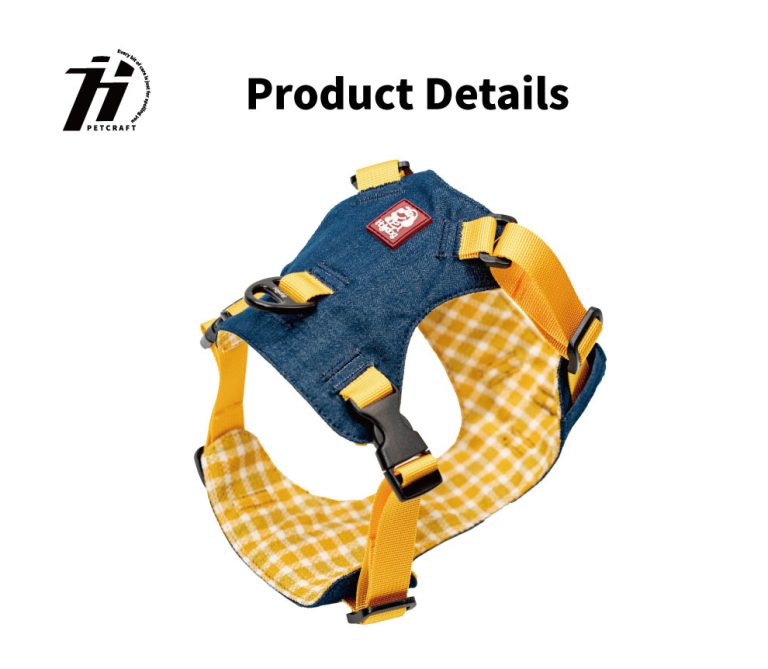
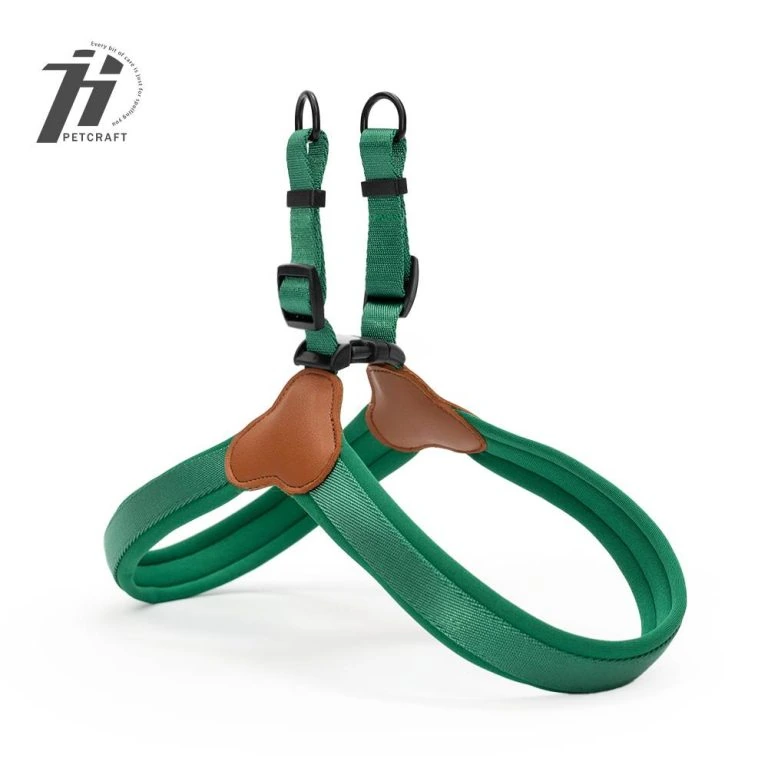
The specified construction of Holydog’s harness consists of high-density polyester webbing on the outside and non-woven material on the inside. The harness features an I-beam construction, front and back alloy D-rings, an alloy opening buckle and POM adjusters. This list of components allows for easy identification of features during sampling.
Check the lining at contact points for folded edges, bulk seams and for hardware that may be in contact with the wearer’s body. Check neck and chest adjusters separately. Check that adjusters are still accessible when the harness is worn and that loose strap ends are managed as intended.
This combination of POM adjusters allows for neck, chest and back side adjustment. The alloy buckle is designed with an opening to put on and take off the harness. In the same colors as the harness, Holydog also offers a Polyester Leash, with a comfortable grip and alloy hook. It is recommended to check the set with the Leash hardware to be able to operate the Leash comfortably with the chosen D-ring.
The two D-rings can be used to attach the leash in different ways. Test each intended configuration for safe use and for the body of the harness not to turn, and for the straps not to get too close to sensitive parts. Simply attaching to the front ring does not solve pulling problems, and an adjustable harness is not escape-proof until it has been tested for that purpose.
Observe Movement Before Approving the Pattern
Observe the dog walking, turning, sitting and standing under appropriate supervision. Note any changes in the dog’s shoulder or chest position and record them. Refrain from undertaking a ‘fit trial’ on an anxious or distressed dog. Instead, find a situation where the dog is calm and the assessment can be repeated to give more accurate results.
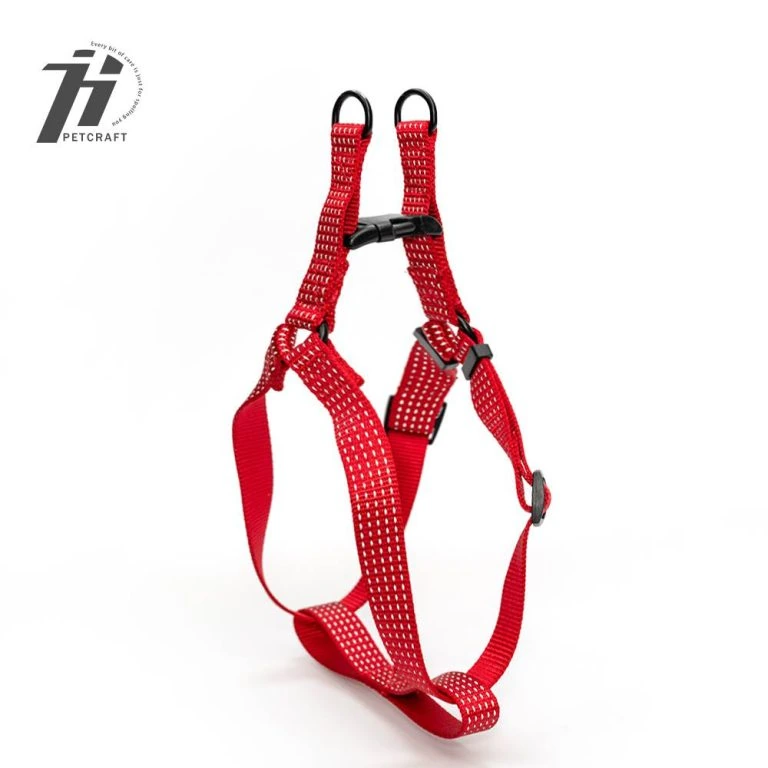
In the specification for this Holydog harness, reflective strips have been incorporated. Check where these strips are placed on the fitted sample, especially where a strap passes through an adjuster. Although reflective trim is highly visible when lit, it does not replace proper lighting with the dog at night and must be handled with care.
How Do You Turn Fit Trials Into a Reliable Size Chart?
Save the measuring method, the sample revisions and the fitting observations as they are very useful for the brand when a second person can follow the steps to get to the same result.
Build a Small, Deliberate Fit Matrix
Representative bodies with near intended range measurements for the trial group should be selected. While body weight of the bodies can be noted, neck and chest dimensions should be visible. Breed labels are too imprecise to use as approval for a production pattern.
Use this sequence for each of your private label dog harness samples.
1. Record neck and chest measurements according to approved method.
2. Identify the sample size and pattern revision.
3. Note adjustment positions before and after movement.
4. Record rubbing, rotation, or difficulties fastening the buckle.
Check for exceptions. If fit problems occur repeatedly at the same boundary, go back to the chart and investigate why the problems are occurring, possibly due to strap length or panel geometry. Printed range cannot be changed to overcome a physical limitation.
Keep Different Constructions Separate
The Holydog I-beam model’s S, M, and L ranges describe both neck and chest adjustment, with a stated 1–2 cm manual measurement tolerance. Use that model-specific information to build its chart. Another harness with different padding, lining, or buckle positioning needs its own approval.
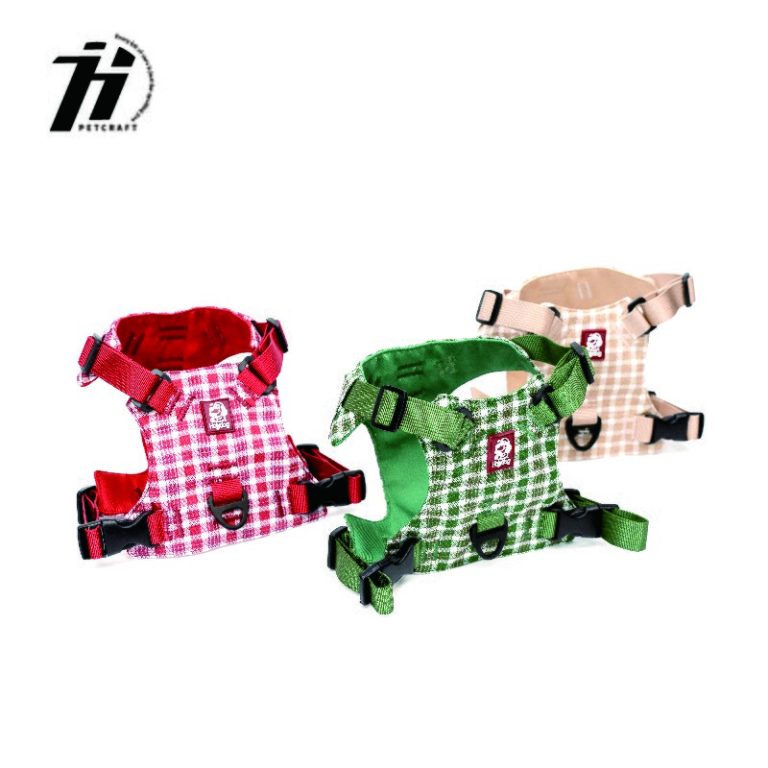
Holydog customizes harnesses, collars and leashes with logos and colors. When discussing coordinated products with Holydog’s OEM / ODM development department, each product will, however, have separate fit instructions. A matching leash will share the Holydog look but not the harness size claim.
What Must Be Locked Before Bulk Production?
The approved sample must define the final product that will be sold to customers and be made up of information that customers would like to know in order to purchase clothing. A size chart and the information on the sewn label must agree even if the rest of the factory is working correctly and making garments up from the approved pattern.
Approve the Product and Instructions as One Set
It would be helpful to keep a signed reference sample for future reference showing size, material type and details of trim, artwork revisions etc. Before issuing packaging information, check the measuring diagram, any necessary adjustments and limitations. Test the information with someone who has not been involved in the development of the packaging and highlight any parts that are unclear.
Holydog’s manufacturing facilities span over 14,000 sqm, including a 2,000 sqm warehouse, 400+ sewing machines and 4 production lines. Relevant for you as a buyer is the fact that manufacturing and development are embedded within our supply relationship with you. Still define how you will check your approved sample during production.
Holydog’s team includes six designers. Bring the fit observations to the development discussion with photographs and marked measurements. A clear request such as moving an adjuster away from a contact area is more useful than asking the designer to make the harness more comfortable without identifying the problem.
Plan Time for Corrections
The production time for sample orders is listed as 7-10 days and for bulk orders as 30-45 days depending on complexity. Please let us know when you would like your configuration to go into production and we will provide you with a time frame for completion including time for any artwork, materials, approvals etc. This should be treated as planning information rather than a firm arrival time.
Schedule time to fix a boundary size after the first fit trial. If the first sample of the private label dog harness needs a longer strap or a shift in the buckle location approve the revised version prior to placing the order for the batch, otherwise a known fit problem becomes a stock problem.
Conclusion
Better dog harness sizing = better sales charts. Create sales charts by measuring neck and chest in combination and define overlaps. Approve your sales charts with a sample of the desired product. Our adjustable I-beam construction, coordinated customization options and manufacturing resources allow you to create the ideal dog harness for your customers. Contact us to discuss your harness sampling needs and we’ll create a first proposal based on your desired measurements, construction, logo and launch date.
FAQs
Q1:Is body weight the single deciding factor when choosing a dog harness size?
A1: No. Use the specific neck and chest sizes for that product and then check the harness out while moving the dog. Even dogs of similar weight can have very different proportions to their body. Weight alone is not enough to ensure that the panels are in the right place or that the harness can be adequately adjusted.
Q2: What if a dog’s measurements fit two sizes?
A2: Compare both sizes using the same fitting method. Check panel location, remaining adjustment, and movement. Don’t automatically recommend the larger size if its neck opening or body position creates another fit problem.
Q3: Can Holydog develop matching branded walking products?
A3: Holydog offers customization of collars, harnesses and leashes in various colors and logos. Materials, dimensions and production time for single items as well as approval of samples for each item have to be agreed upon separately before offering them in a range that can be ordered brand exclusive.