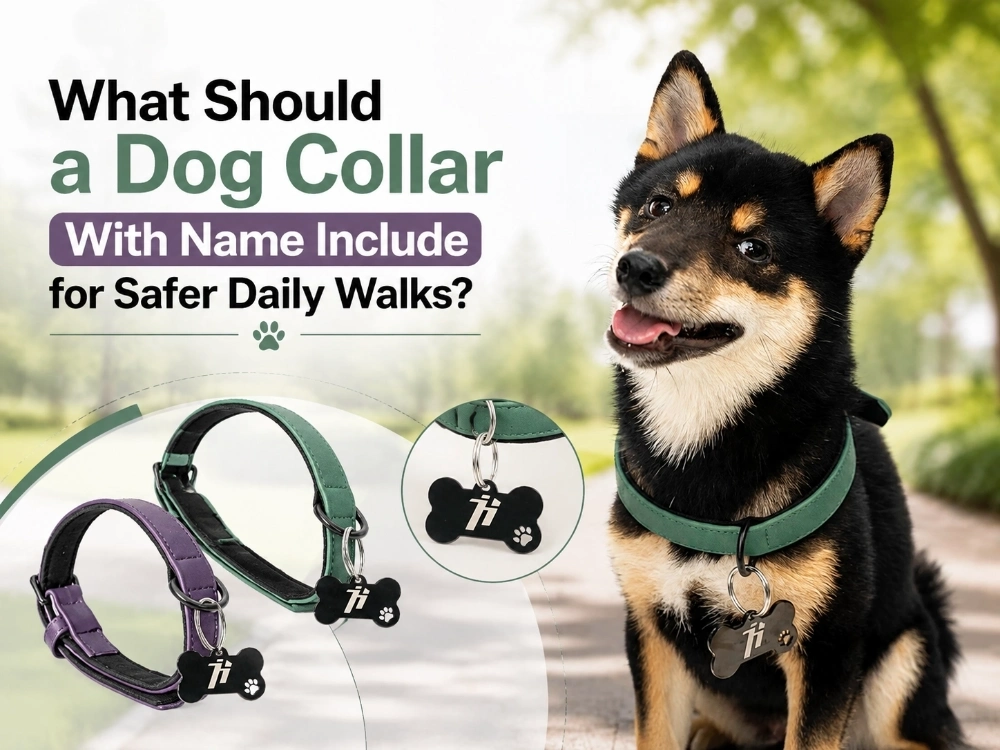
Un collar para perros práctico y con nombre debe hacer algo más que mostrar la identidad de la mascota. La información debe ser legible, el collar debe ajustarse correctamente y la placa o etiqueta no debe interferir con la hebilla ni con el punto de sujeción de la correa.
Eso suena sencillo hasta que todas esas funciones se concentran en un collar estrecho. Añadir más texto puede dificultar la lectura. Una placa decorativa puede verse atractiva, pero resultar voluminosa para el perro equivocado. Una mala colocación también puede provocar que la etiqueta y los herrajes de la correa choquen entre sí durante el paseo. Lo ideal es considerar la identificación, el ajuste, los herrajes, los materiales y el uso diario como un sistema integral. Eso es lo que diferencia un collar práctico y personalizado de uno diseñado principalmente por su apariencia.
¿Qué información debería contener realmente un collar para perros con nombre?
Un collar tiene espacio limitado, por lo que cada línea de información debe tener un propósito.
¿Debe ir primero el nombre del perro o el número de teléfono?
En la mayoría de los diseños, el nombre del perro y un número de contacto actualizado constituyen la base práctica. Un collar con el nombre y el número de teléfono permite a quien lo encuentre identificar al perro de inmediato y contactar con el dueño sin sobrecargar el espacio con demasiado texto.
El número de teléfono merece especial atención, ya que los datos de contacto incorrectos o desactualizados reducen considerablemente la utilidad de la identificación. Por lo tanto, quienes diseñen una gama personalizada deberían ir más allá de la capacidad de grabado y considerar la claridad con la que se podrá leer el número una vez que se lleve puesto el collar.
Agregar varios números de teléfono, la dirección completa, frases largas o texto decorativo puede sobrecargar una placa pequeña. El espacio disponible debe determinar cuánta información se incluye, en lugar de intentar incluir todos los detalles posibles en la etiqueta.
¿Por qué la legibilidad es más importante que los detalles decorativos?
El tamaño de la letra, el contraste, el espaciado y el área de grabado disponible influyen en la rapidez con la que se puede comprender la información.
Esto cobra especial importancia en el caso de un collar para perro con placa de identificación, ya que la placa tiene dimensiones fijas. Un diseño que se ve nítido en el boceto puede resultar difícil de leer una vez reducido al tamaño de producción.
Las marcas deberían aprobar la muestra física en lugar de juzgar únicamente el diseño digital. Compruebe el tamaño de la letra, el espaciado entre líneas, el reflejo de la superficie y si la información permanece visible cuando el collar se ajusta de forma natural al cuello del perro.
¿Debería elegir una placa con el nombre o una etiqueta colgante?
Ambos formatos pueden funcionar, pero se comportan de manera diferente en el uso cotidiano.
Una placa mantiene la identificación cerca del cuello.
El diseño tipo placa mantiene la información más cerca del cuerpo del collar. Esto puede crear una apariencia más limpia y reducir el movimiento alrededor del cuello.
Sin embargo, los compradores deben verificar la posición de la placa con respecto a los herrajes de ajuste, las costuras y el punto de sujeción de la correa. No debe limitar el rango de ajuste del collar ni crear una sección rígida en una zona que necesita flexibilidad.
El tamaño de la placa también debe coincidir con el del collar. Una pieza grande en un collar estrecho puede añadir peso innecesario o alterar la forma en que se asienta el collar.
Una etiqueta colgante ofrece flexibilidad pero necesita posicionamiento.
Un collar para perros con placa de identificación ofrece mayor libertad en cuanto a la forma y el diseño visual de la placa. Además, facilita su reemplazo si la información cambia.
La desventaja es el movimiento. La etiqueta colgante se balancea cuando el perro camina, corre, come o juega. Los compradores deben revisar la anilla de conexión, el peso de la etiqueta, los bordes y su relación con la anilla de la correa.
Aquí es donde el diseño del producto cobra mayor importancia que la elección de una etiqueta con una forma moderna.
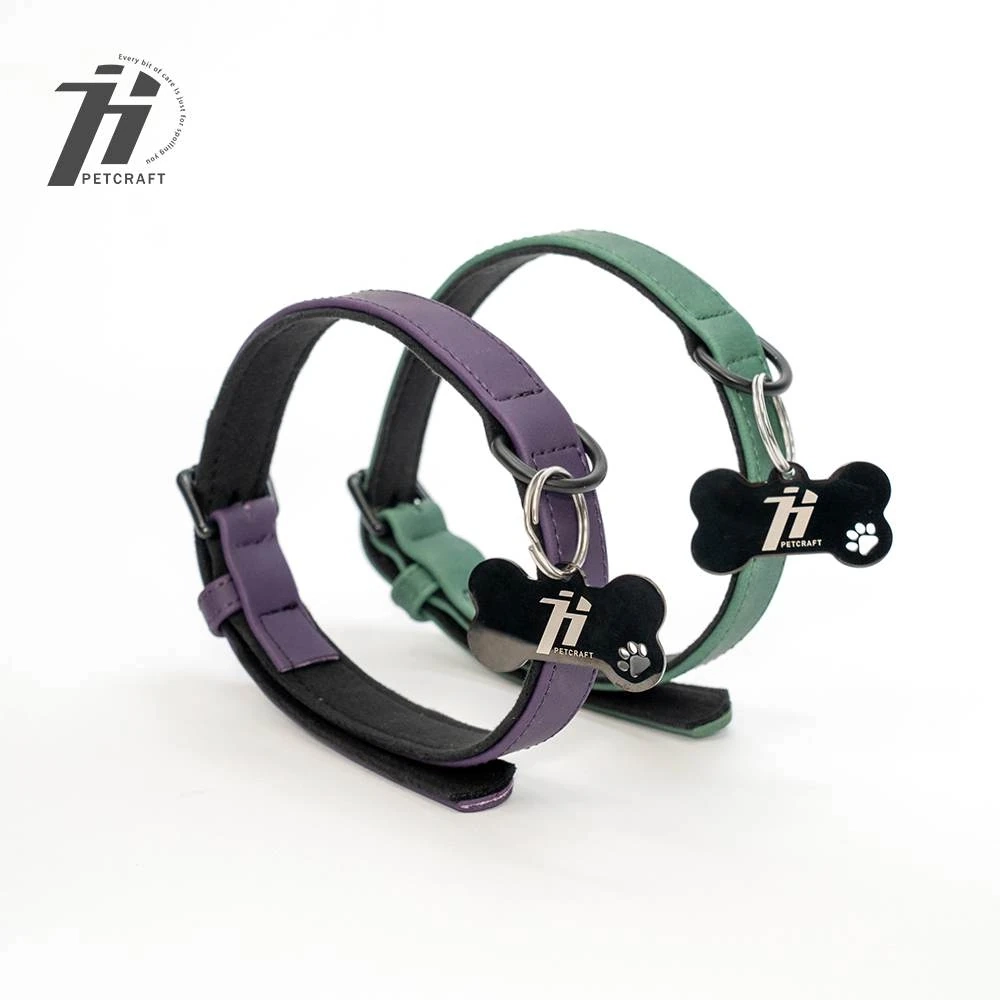
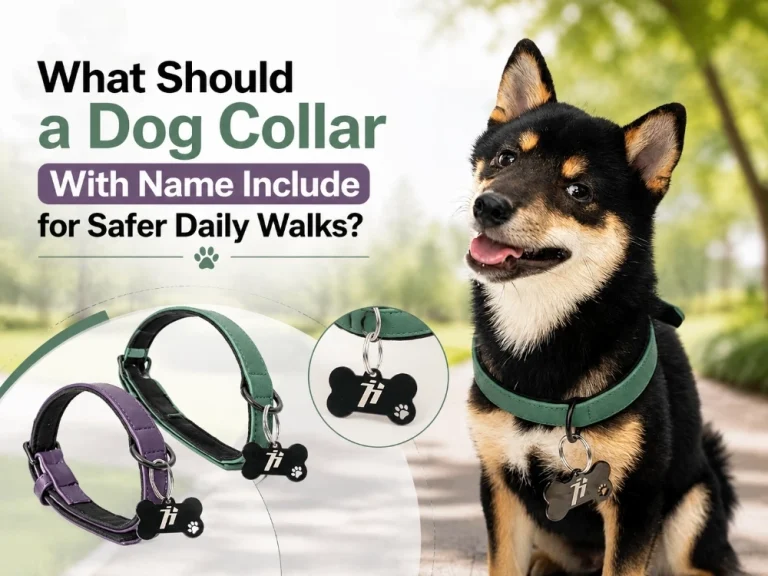
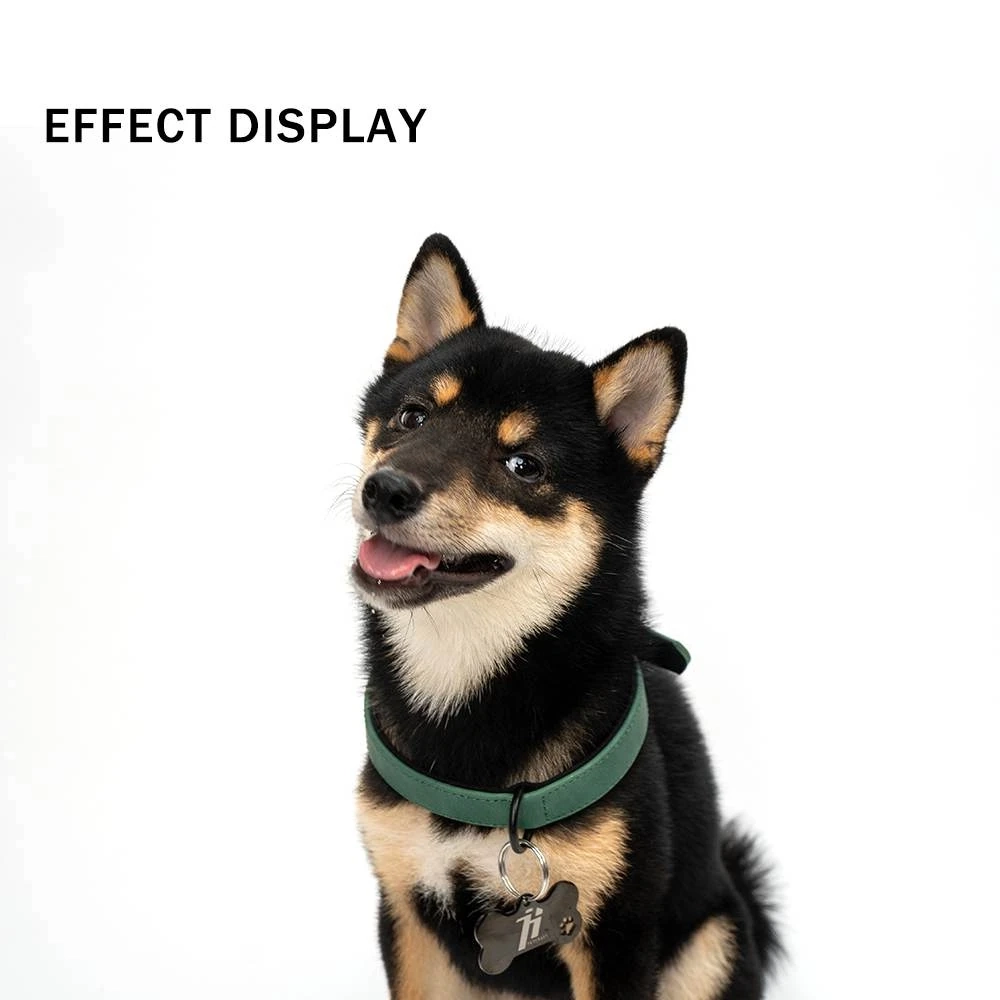
Holydog Collar de piel sintética con etiqueta personalizable en forma de hueso. Esto proporciona un ejemplo útil. La placa metálica con forma de hueso puede llevar el nombre del perro y su información de contacto, mientras que la correa se sujeta por separado a una anilla de aleación. Mantener estas dos funciones separadas ayuda a evitar que un solo componente pequeño cumpla ambas tareas.
¿Por qué el ajuste correcto sigue siendo más importante que la personalización?
La identificación solo aporta valor si el collar permanece correctamente colocado en el perro.
Comience con la circunferencia del cuello, no con el nombre de la raza.
Los perros de la misma raza pueden tener dimensiones de cuello diferentes. Por lo tanto, medir el cuello real es más útil que elegir un collar basándose únicamente en suposiciones sobre la raza o el peso corporal.
El collar E005 está disponible en tres tallas: S (20–35 cm), M (30–50 cm) y L (40–65 cm). Está diseñado para perros de tamaño mediano que pesan aproximadamente entre 5 y 25 kg.
Al colocar este collar, deje aproximadamente uno o dos dedos de espacio y compruebe que la hebilla esté bien ajustada. El collar no debe quedar tan suelto como para que se deslice por la cabeza, pero apretarlo demasiado puede generar presión y fricción innecesarias.
Vuelva a comprobar el ajuste después del ajuste.
Tras el ajuste, conviene realizar una sencilla comprobación física. Tire suavemente del collar y compruebe que la hebilla permanezca cerrada y que la correa no se mueva en exceso.
Los dueños deben repetir la comprobación de la talla a medida que el perro crece, gana o pierde peso, o desarrolla un pelaje más denso según la estación. Para las marcas, esto también justifica que la información sobre la talla esté claramente indicada en el envase, en lugar de considerarla información secundaria del producto.
Los compradores que comparan otros estilos pueden Descubre los collares para mascotas de Holydog para ver cómo los diferentes materiales, hebillas, elementos reflectantes, etiquetas y diseños de collar se adaptan a diferentes estrategias de posicionamiento.
¿Cómo deben funcionar conjuntamente la placa de identificación, la hebilla y la anilla de la correa?
Un collar personalizado sigue siendo un accesorio para caminar. La disposición de los herrajes merece tanta atención como el grabado.
Mantenga la identificación separada de los herrajes de soporte de carga.
La etiqueta contiene información. El punto de sujeción de la correa soporta la fuerza de tracción. Estas funciones deben evaluarse por separado.
La correa debe conectarse a la anilla en O o en D designada, en lugar de a una etiqueta de identificación decorativa. Los compradores deben verificar la posición de la anilla después de ajustar el collar, ya que las piezas metálicas que parecen estar bien separadas cuando están planas pueden juntarse mucho más una vez colocadas alrededor del cuello.
El diseño E005 utiliza sujetadores de aleación de zinc y una junta tórica de aleación independiente para la sujeción de la correa. La etiqueta metálica en forma de hueso sigue siendo un elemento de identificación y decorativo.
Esté atento a la agrupación de hardware.
Un exceso de componentes metálicos en una sección pequeña puede generar ruido, peso innecesario o movimientos incómodos.
Al revisar una muestra, coloque el collar en un perro o en un maniquí de tamaño adecuado. Enganche la correa y muévala en varias direcciones. Compruebe si la placa de identificación golpea repetidamente la hebilla, si queda debajo del cuello y si el gancho de la correa cubre la información grabada.
Se trata de pequeños detalles en una hoja de especificaciones, pero pueden afectar significativamente la experiencia con el producto final.
¿Qué materiales hacen que un collar personalizado para perros sea más fácil de usar a diario?
La elección del material influye en algo más que la apariencia. También afecta a la limpieza, la flexibilidad, el contacto con la piel y la correcta integración de las piezas personalizadas con el collar.
¿Por qué puede ser útil una construcción por capas?
El modelo E005 combina una superficie exterior de cuero sintético (PU) con un forro interior de tela no tejida. La superficie de PU se puede limpiar con un paño húmedo después del uso diario, mientras que la capa interior, más suave, está en contacto con el cuello del perro.
Para evitar arañazos, mantenga los objetos punzantes alejados de la superficie de poliuretano. Después de limpiarlo, deje que el collar se seque antes de guardarlo.
Este tipo de confección es especialmente relevante cuando un collar personalizado para perros está destinado a paseos rutinarios por el vecindario y salidas sociales, en lugar de un uso decorativo ocasional.
El acabado de los herrajes también necesita atención.
Los componentes metálicos están expuestos a manipulación repetida, humedad, movimientos de correas y contacto con superficies. Por lo tanto, su acabado debe verificarse durante el muestreo, en lugar de asumir que se trata de una decisión puramente decorativa.
Para un collar para perro con placa de identificación o etiqueta colgante, el comprador debe inspeccionar la superficie de la etiqueta, la anilla de conexión, la hebilla y la anilla de la correa en conjunto. El collar puede tener varios componentes, pero los clientes los perciben como un solo producto.
¿Qué deben confirmar las marcas antes de encargar collares personalizados para perros?
La personalización añade varias variables que no existen en un collar estándar. Por ello, la aprobación de la muestra es especialmente importante.
Convierta la personalización en una especificación clara.
Un informe de compra útil puede definir:
- Material del cuello y forro;
- rangos de tamaño;
- Colores del cuello y los herrajes;
- formato de placa de identificación o etiqueta colgante;
- área de grabado disponible;
- número de líneas de texto;
- posición del logotipo;
- Colocación de la hebilla y la anilla de la correa;
- Embalaje y etiquetado de tamaño.
Para un collar para perro con nombre y número de teléfono, la muestra debe contener texto realista en lugar de imágenes de ejemplo. Esto permite al comprador comprobar si los nombres y datos de contacto reales se mantienen legibles después de la producción.
Holydog apoya Personalización OEM y ODM para productos para mascotas, incluyendo el logotipo, el color, los accesorios y los ajustes de tamaño. Las muestras personalizadas suelen tardar entre 7 y 10 días, mientras que la producción en masa normalmente tarda entre 30 y 45 días, dependiendo de la complejidad.
Compruebe la repetibilidad, no solo la primera muestra.
El primer collar aprobado establece el diseño. El éxito comercial también depende de si los lotes posteriores pueden reproducirlo de forma consistente.
Esto implica mantener registros de los colores aprobados, las dimensiones, la ubicación del texto, el acabado de los herrajes, el diseño del empaque y otros detalles personalizados. Esto es especialmente importante cuando un minorista ofrece varios tamaños o colores de collares dentro de la misma colección personalizada.
Holydog opera su fábrica principal y sus sucursales en una superficie de más de 14 000 metros cuadrados, con el apoyo de un almacén propio de 2000 metros cuadrados, más de 400 máquinas de coser y cuatro líneas de producción. La empresa cuenta con 160 empleados, incluyendo un equipo de diseño de seis personas, así como un laboratorio y un sistema de calidad integral. Posee las certificaciones BSCI, SEDEX, ISO 9001 e ISO 14001.
Esas capacidades importan cuando la personalización va más allá de una sola muestra y se convierte en un programa de pedidos repetidos. Los compradores que ya conocen el formato de etiqueta, el rango de tallas, los colores y el embalaje que desean pueden enviar a Holydog sus requisitos de personalización para una discusión de producción más específica.
Conclusión
Un collar para perros con el nombre impreso funciona mejor cuando la identificación está diseñada como parte del collar en lugar de agregarse como un añadido posterior.
Empiece con información legible. Mantenga el nombre del perro y los datos de contacto útiles bien visibles, en lugar de llenar el espacio disponible con texto innecesario. Luego, compruebe que le quede bien, porque ni siquiera una placa de identificación bien diseñada puede compensar un collar demasiado suelto o demasiado apretado.
A continuación, analicemos el hardware como un sistema. La hebilla asegura el collar, la anilla de la correa facilita la conexión y la etiqueta indica la identificación. Estas partes deben funcionar en conjunto sin interferir entre sí.
Para las marcas que desarrollan una gama de collares personalizados para perros, la misma lógica debe aplicarse a la fase de muestreo. Verifique el grabado, el tamaño real, la ubicación de los herrajes, el color, el empaque y la repetibilidad antes de aprobar la producción. Un buen collar personalizado no solo es reconocible, sino que también resulta cómodo, legible y práctico cada vez que el perro sale a la calle.
Preguntas frecuentes
P1: ¿Qué información debe figurar en un collar para perros con placa de identificación?
A1: El nombre del perro y el número de contacto del dueño actual son un buen punto de partida. Evite sobrecargar una etiqueta pequeña con demasiada información, ya que un texto demasiado denso puede dificultar la lectura. El diseño final debe revisarse en el tamaño real de producción, no solo en un diseño digital.
P2: ¿Es mejor un collar para perros con placa de identificación que una etiqueta colgante?
A2: Ninguno de los formatos es automáticamente mejor. Una placa se mantiene más cerca del cuello y puede moverse menos, mientras que una etiqueta colgante ofrece mayor flexibilidad en cuanto a forma y reemplazo. La opción correcta depende del ancho del cuello, el peso de la etiqueta, el rango de ajuste, la disposición de los herrajes y la cantidad de información requerida.
P3: ¿Qué deben comprobar los compradores antes de pedir un collar personalizado para su perro?
A3: Compruebe el material del collar, el forro, el rango de tallas, la hebilla, el punto de sujeción de la correa, el formato de la etiqueta, la legibilidad del texto, la posición del logotipo, los colores y el embalaje. También se debe probar una muestra terminada con su forma ajustada para evaluar la colocación de los herrajes y el movimiento de la etiqueta antes de la producción en masa.