For typical daily outings, a PU leather dog collar edges out a nylon dog collar if the owner seeks a tidier appearance, simpler wiping, and gentler touch on the neck. Nylon holds its ground, though. It stays lightweight, bends easily, and serves well for rugged outdoor activities. Yet for local strolls, park meetups, brief errands, and routine wear, PU leather typically offers a finer mix of ease, appeal, and upkeep. This balance suits many pet routines.
The right pick hinges on four main aspects: fit, lining, cleaning, and hardware. A solid dog collar for walks must do more than just attach a leash. It needs to rest comfortably, prevent chafing, remain firm during mild tugs, and retain its form through ongoing wear. These elements ensure reliable performance over time.
PU Leather vs Nylon: Which Collar Fits Daily Use Better?
Most owners compare materials first, but daily use is more specific than material labels. A calm medium dog walking twice a day has different needs from a muddy trail dog or a puppy that chews gear. Before choosing, look at where the dog walks, how often the collar gets dirty, and how sensitive the neck area is.
PU Leather Is Better for a Clean Daily Collar
A PU leather dog collar suits owners who want an easy-clean dog collar with a more refined look. The smooth surface is easier to wipe than woven fabric, so light mud, dust, and surface stains are less likely to stay. This matters after walks through grass, damp sidewalks, or busy city streets.
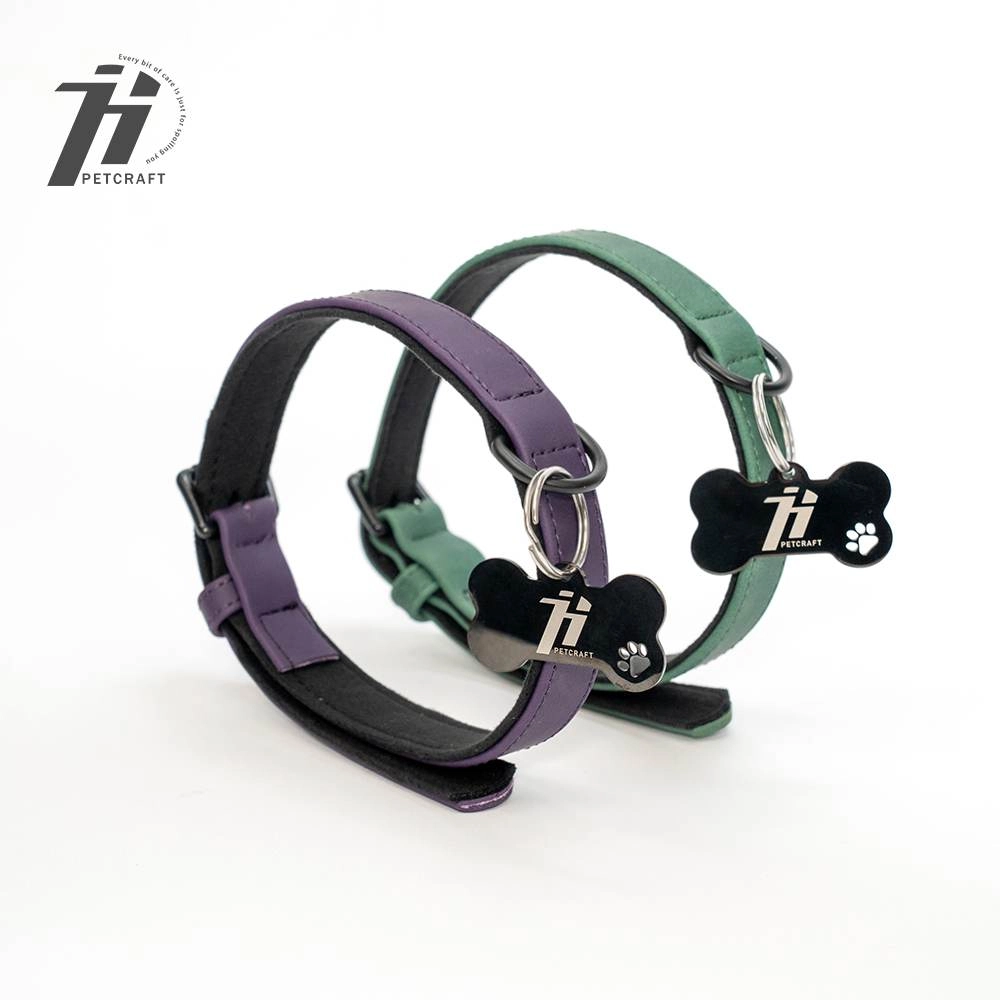
It also looks more dressed than a basic nylon dog collar. Many owners now treat collars as part of a pet’s daily appearance, especially for cafés, photos, travel, or social walks. Holydog’s E005 Pet Collar follows this direction with PU leather outside and soft non-woven fabric inside. The outside handles appearance and simple cleaning; the inner side helps reduce friction during normal movement.
Nylon Still Works for Rougher Outdoor Needs
A nylon dog collar is still a strong choice for some dogs. It is usually light, flexible, affordable, and easy to replace. For dogs that swim, roll, dig, or need spare gear for training, nylon can make sense.
The weakness is care. Woven nylon can trap smell, hair, and dirt more easily than a smooth PU surface. If the collar is not dried well after wet walks, it may feel damp against the neck. Some low-quality nylon collars also have stiff edges that may rub sensitive skin. So nylon is not “bad.” It is simply better for active, messy, or budget-driven use.
Comfort Comes From Construction, Not Just Material
A comfortable dog collar is not created by material alone. The inner lining, edge finish, width, weight, and fit all matter. Many collar complaints come from poor sizing or rough edges, not from PU leather or nylon itself. Owners should judge how the collar touches the dog’s neck during movement, not just how it feels in the hand.
Lining, Edges, and Neck Contact
Dogs move their necks constantly when sniffing, turning, and pulling lightly. A stiff collar may look fine in a product photo but feel harsh during a 30-minute walk. This is why lining matters. A soft inner layer can make a big difference for dogs that wear collars every day.
Holydog’s E005 uses non-woven fabric lining, designed to feel soft and skin-friendly. That helps position it as a comfortable dog collar for medium-sized dogs, especially when owners want a collar for regular walks rather than occasional use.
Size Is the First Safety Step
Fit is just as important as material. A dog collar for walks should leave about 1–2 fingers of space between the collar and the neck. Too tight, and it may leave marks or cause rubbing. Too loose, and the dog may slip out when excited.
The E005 is designed for medium-sized dogs weighing 5–25kg. Its size options cover S 20–35cm, M 30–50cm, and L 40–65cm. This gives buyers a clearer way to choose by neck size rather than relying only on the breed name. For pet brands and retailers, better size guidance also means fewer returns and fewer complaints.
Cleaning, Moisture, and Long-Term Appearance
Daily walks expose collars to dust, rain, grass, dog hair, and hand oils. A collar does not need extreme adventure to become dirty. It only needs ordinary use. That is why cleaning and material aging should be part of the buying decision, not an afterthought.
Easy Cleaning Is Where PU Leather Wins
A PU leather dog collar generally cleans with less hassle than nylon. Surface smudges often lift via a moist rag, and the piece can air dry prior to putting away. This renders PU leather a solid pick for those after an easy-clean dog collar minus frequent soaks. Simplicity aligns with busy lives.
Holydog’s E005 centers on this pattern. The PU leather shell stays smooth, and the routine stays basic: swab the face, allow drying, and steer clear of deep cuts. These steps maintain freshness without complexity. If existing collars develop scents, spots, or fade swiftly, switching to a surface that matches actual paths, not initial outlay, makes sense. It extends the item’s life.
Waterproof Claims Need Careful Reading
Many owners search for a waterproof dog collar, but the word “waterproof” can be too broad. A collar may resist light rain but still not be made for swimming. Another collar may dry quickly but still hold smell. Buyers should check surface material, edge sealing, lining, and hardware.
PU leather can handle light moisture well when cleaned properly, but it should not be treated as automatically waterproof. Nylon may work well in wet use if the webbing is thin and quick-drying. For the beach, swimming, or heavy rain, buyers should look for a dedicated waterproof dog collar with suitable construction.
Hardware and Safety During Walks
A collar is part of a walking system. The leash, buckle, O-ring, tag, and owner handling all work together. Material gets attention first, but hardware carries the real walking load. A nice collar with weak metal parts is not a safe choice for daily pulling or sudden movement.
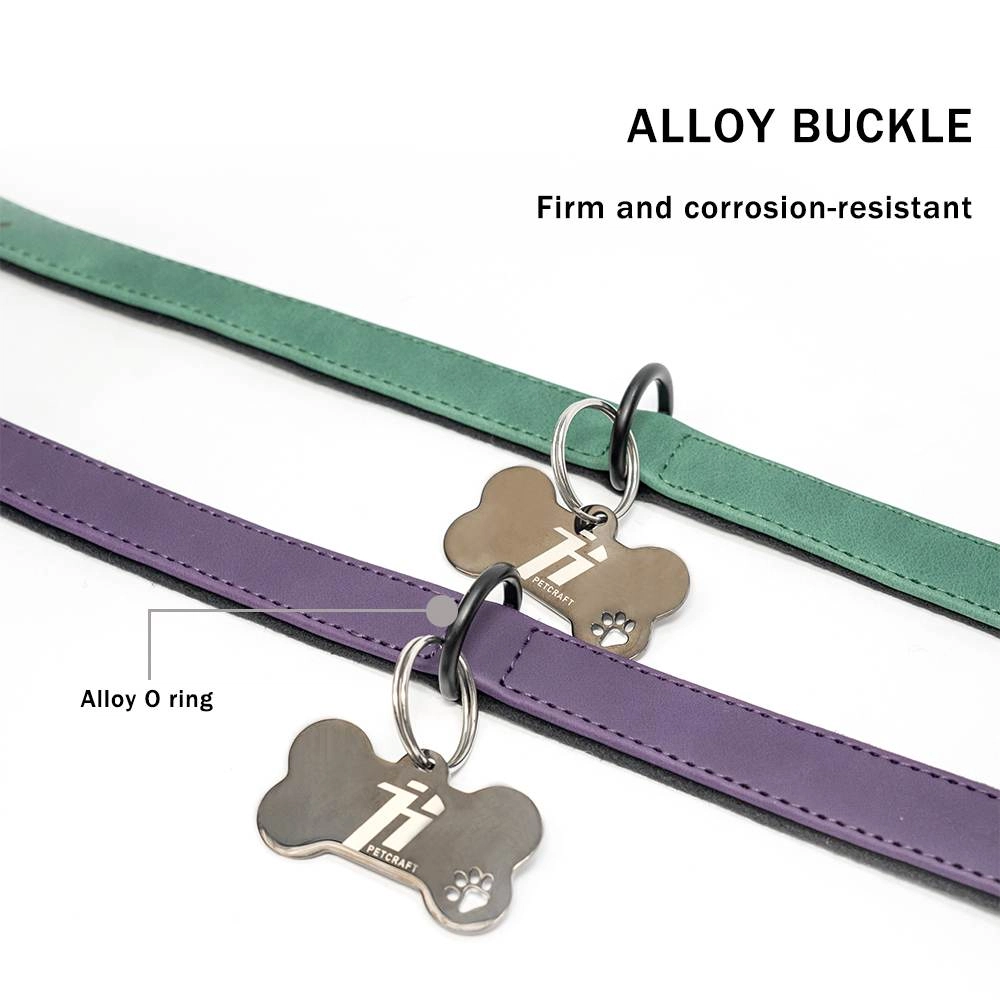
Buckle, O-Ring, and ID Tag
The buckle should close firmly, and the leash ring should feel stable. If the ring twists, bends, or loosens easily, the collar may fail even if the material looks good.
Holydog’s E005 uses a zinc alloy buckle and alloy O-ring with rust-resistant treatment. It also includes a bone-shaped metal tag that can serve both decoration and identification. For a daily dog collar, these details make the product more complete. For brands developing a collar line, Holydog’s custom pet product design and manufacturing services can support material choices, sizing, sample approval, and production planning.
Conclusion
PU leather is usually better than nylon for daily walks when the buyer values appearance, easy care, and soft neck contact. Nylon remains useful for active, messy, or low-cost situations. For pet brands, retailers, and distributors, the choice is more strategic. Buyers are not only looking for cheap collars. They want products that photograph well, feel comfortable, clean easily, and support personalization.
If your current collar range depends mostly on standard nylon designs, it may miss buyers who want a cleaner and more giftable daily dog collar. A better next step is to build around real walking needs: comfort, easy cleaning, secure hardware, sizing, and customization. Holydog’s OEM/ODM service can support logo printing, color customization, functional accessories, and bespoke sizing. For a new collar line or bulk inquiry, contact us with your target market, sizes, and color plan.
FAQs
Q: Is a PU leather dog collar good for daily walks?
A: Yes. It is neat-looking, easy to clean, and comfortable for normal walks.
Q: Is a nylon dog collar better for active dogs?
A: Often yes. Nylon is light, flexible, and practical for rough outdoor use.
Q: Can PU leather be a waterproof dog collar?
A: It resists light moisture, but heavy wet use needs product-specific confirmation.