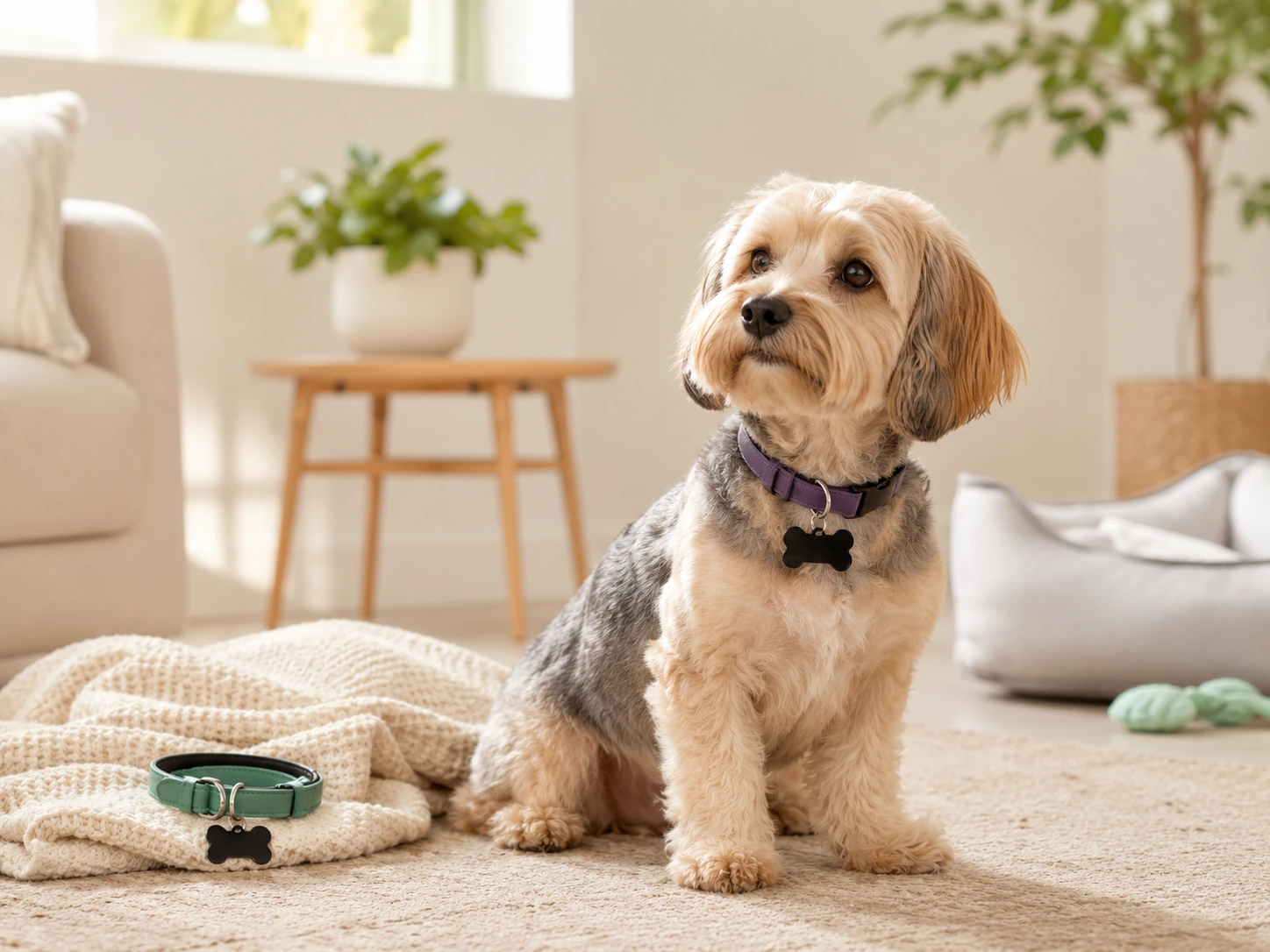
A dog can be missing for only a few minutes before the small details start to matter. A neighbor may be willing to help, yet the number on the tag is old. The engraving may be so crowded that it cannot be read without holding a nervous dog still. Or the tag may be hidden under thick fur, turning useful information into guesswork.
People often type “what to put on dog tag” because the space looks simple until they try to fill it. The practical answer is short: begin with a phone number that will be answered, then add only the details that help the finder take the next step. Decoration comes after contact.
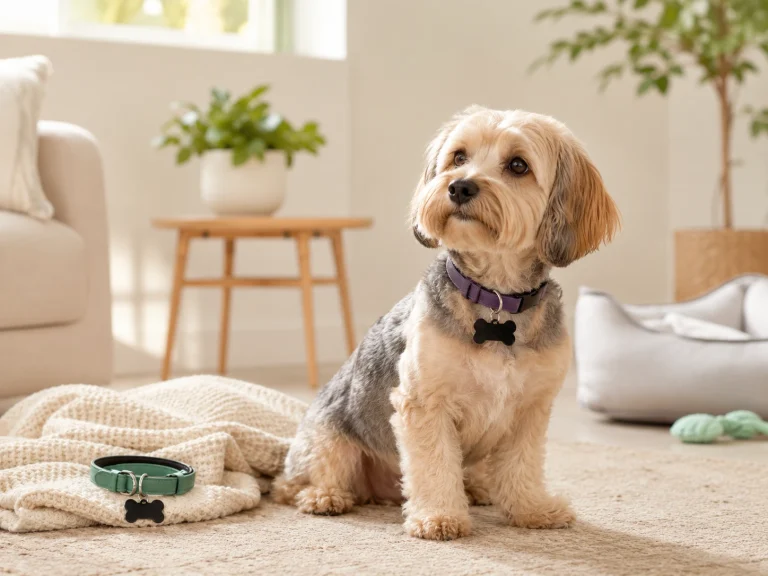
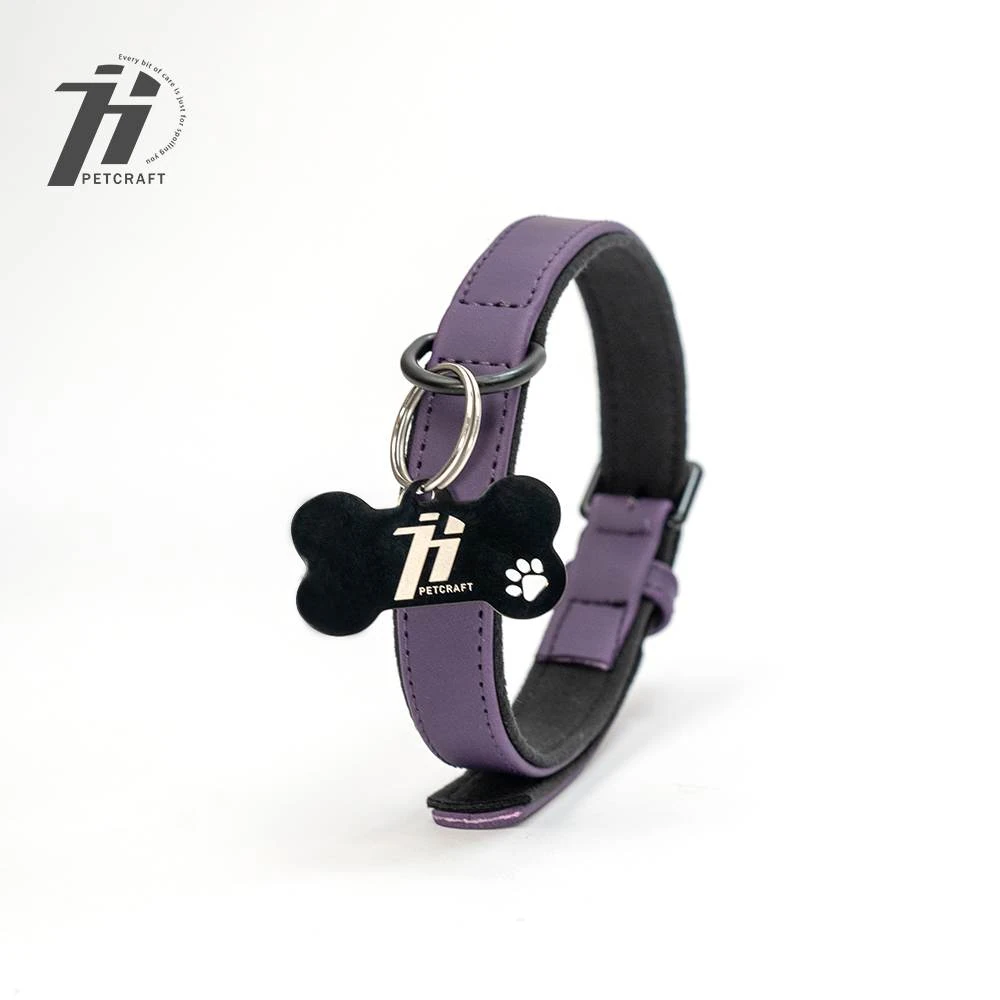
That is why the wording and the collar should be considered together. Holydog’s PU Leather Pet Collar places a customizable bone-shaped metal name plate directly on a PU leather collar, so the dog’s name and contact details have a defined home instead of being treated as an afterthought. It is a useful example throughout this guide: the plate still has limited space, and its value depends on choosing the few details that help a finder act quickly.
What Information Should Go on a Dog ID Tag First?
Start with the person who finds the dog, not with the person ordering the engraving. That finder needs one obvious action. The best dog tag information therefore earns its place by answering a blunt question: what can someone use right now to get this dog home?
Which phone number gives the fastest route back?
Use the number most likely to reach a real person during the hours when the dog is usually outside. For many households, that is a mobile number. Include the area or country code if the dog travels, lives near a border, or may be found by a visitor using an overseas phone. Avoid a work line that goes unanswered after hours or a number protected by an unfamiliar call-screening system.
Before approving an E005 engraving layout, call the number from another phone and read it back one digit at a time. This sounds almost too basic, but a transposed digit defeats the whole plate. Put the number on its own line when the available layout allows it, and review it whenever you move, change carriers, or replace a family contact.
Does the dog’s name deserve the first line?
A dog’s name can help a calm finder speak gently and confirm that the animal responds, but it is optional. Some owners prefer not to display it; others value the quick familiarity it creates. Either choice can work. The mistake is letting a large decorative name squeeze the only usable phone number into tiny text.
When deciding what to write on dog tag, try two mock-ups for the bone-shaped plate: one with the name above the phone number, and one with the phone number alone. Read both at arm’s length. If the version with the name is still clear, keep it. If not, contact wins.
Why Does the Collar Design Matter Before You Choose the Wording?
Engraving is only half of identification. The other half is how the information sits on the dog. A plate that turns inward, disappears into fur, or separates from its attachment point may be hard to use even when every line is correct. This is where the physical design of a dog collar with name plate becomes relevant.
How does a fixed name plate differ from hanging dog collar tags?
Traditional dog collar tags usually hang from a split ring. They are easy to replace and can carry different kinds of information, but they also swing, rotate, and sometimes stack behind license or vaccination tags. A mounted plate stays closer to the collar and presents a flatter profile. It may be quieter and easier to locate by touch, although no attachment style should be treated as impossible to lose.
The choice is less about declaring one format universally better and more about the dog’s routine. A dog that wears several legally required tags may still need a hanging ring. A dog whose ordinary walks call for one clear contact plate may benefit from a fixed layout. Check the local identification or licensing rules before removing anything required in your area.
What does the E005 collar contribute beyond the engraving?
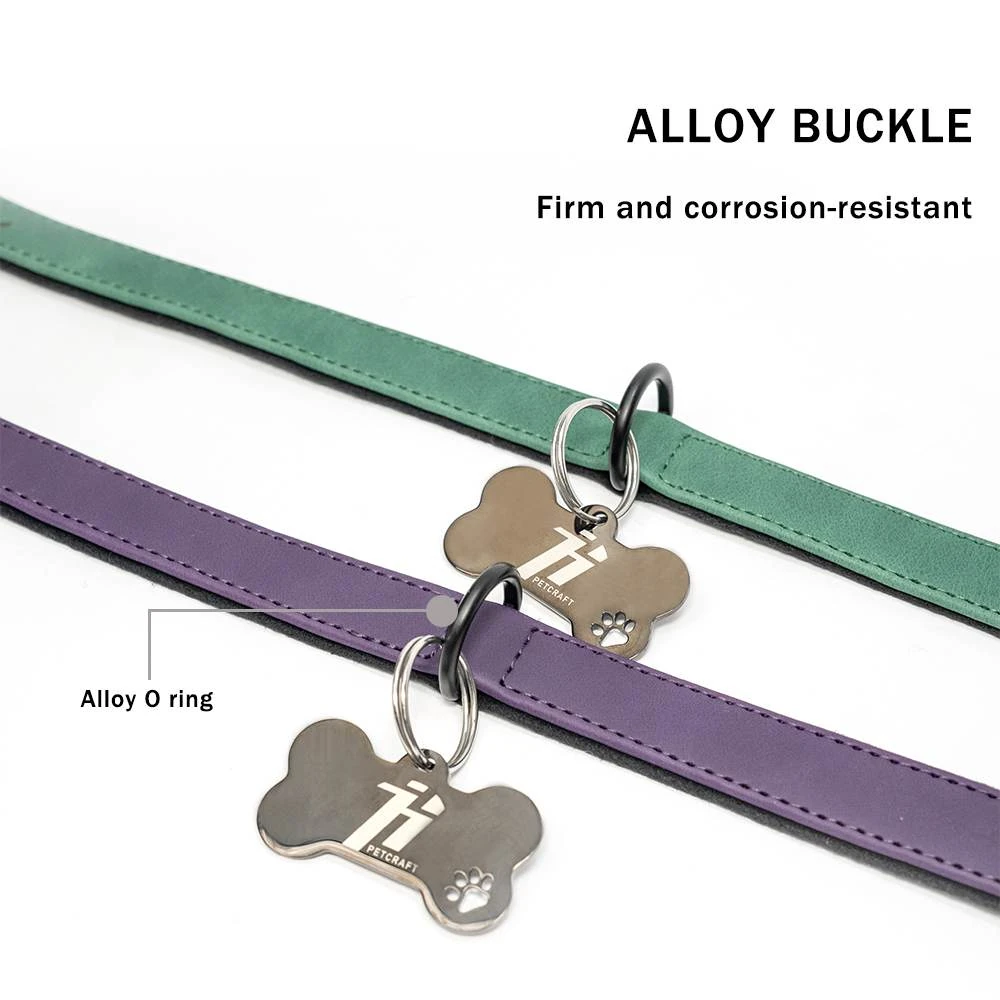
The E005 combines a PU leather outer layer with a non-woven inner lining, zinc-alloy hardware, an O-ring for the leash, and the customizable bone-shaped plate. Holydog presents it for dogs around 5 to 25 kg in everyday settings such as neighborhood walks and pet socializing. Those details matter because identification is more likely to be useful when it is attached to a collar that suits the dog’s size and normal routine.
A buyer considering the dog collar with name plate should still check the actual neck measurement and the finished sample. A metal plate does not correct a collar that is too loose, too tight, or unsuitable for the dog’s activity. It also does not prove that an engraving will remain readable forever. The sensible promise is more modest: the product gives the contact information a dedicated, integrated place.
Which Extra Details Are Worth the Limited Space?
Once the primary phone number is secure, every extra line should have a job. Useful additions either create another realistic contact route or tell the finder what to do next. Anything else competes with readability. That is the central trade-off when deciding what to write on dog tag after the essentials are covered.
When does a second phone number earn its space?
A second number is worthwhile when the second person is genuinely available and able to collect the dog. A partner, relative, dog walker, or nearby friend may be a better backup than another number that reaches the same unattended household. Ask the person first, and label the line only if the added word does not crowd the digits.
For a compact plate, test the main and backup numbers without names. If both remain easy to distinguish, the redundancy is useful. If the characters become cramped, keep the strongest number on the plate and store wider contact details in the dog’s microchip registration or another record.
Should you add an address, microchip note, or medical message?
An address can help when a dog slips out close to home, but it also uses a great deal of space and raises privacy questions for some owners. A city or neighborhood may be enough in one situation and useless in another. Check local rules, consider where the dog normally travels, and do not sacrifice a readable phone number merely to fit a full street address.
The AKC identification guidance treats a dog’s name, address, and contact phone number as typical ID-tag content, while also stressing that the tag must remain legible. That last point is easy to miss. Adding another line is not an improvement if it forces every character to become difficult to read.
A microchip note can be useful, but a chip and a visible tag solve different parts of the same problem. A finder can read a phone number immediately; a microchip must be scanned, and the registration record must lead to current contact details. AKC Reunite guidance likewise emphasizes enrollment and up-to-date owner information. A short phrase such as ‘MICROCHIPPED’ can point toward that second route without replacing the phone number on the collar.
Keep any medical wording brief and action-oriented, and confirm it with the dog’s veterinarian. A phrase such as ‘NEEDS MEDS’ may encourage a finder to call promptly, but the plate is not a medical record. Do not try to compress a diagnosis, dosage, or treatment plan onto a small collar plate.
How Can You Keep Dog Tag Information Readable Over Time?
A clear plate on day one can become an unreliable plate six months later. Phone numbers change. Dirt settles around letters. A collar fit shifts with coat length or weight. Treat identification as something to inspect, not something finished forever.
Why do fewer lines usually create a clearer tag?
Fewer lines leave more room for larger characters and cleaner spacing. Begin with the main number, then add the dog’s name or a backup number only if the layout stays legible. Skip quotes, jokes, social handles, and decorative punctuation unless they serve a real contact purpose. The plate should work for a stranger who is reading quickly, outdoors, perhaps while the dog is moving.
A useful way to answer the search phrase “what to put on dog tag” is to read the proposed engraving aloud in priority order. If the first thing you say is not the fastest contact route, rearrange it. This also helps brands reviewing a sample: the font, spacing, and plate shape should support the information hierarchy rather than fight it.
What should you inspect after everyday wear?
Look at the whole system. Can you read every digit without tilting the plate toward a light? Does the plate sit securely against the collar? Is the buckle closing normally, and is the O-ring free from visible damage or distortion? Check that the collar still fits the dog and that hair is not permanently covering the information. Hanging dog collar tags deserve the same review, especially at the small connecting ring.
For the E005, Holydog advises wiping the PU leather surface with a damp cloth, letting it dry, and avoiding sharp objects that may scratch the surface. During that same routine, inspect the plate, buckle, O-ring, and collar fit. The product page describes the collar for gentle or moderately active dogs within its stated size range, so a dog outside that use case should be matched to a different design rather than relying on the name plate alone.
Finally, set a recurring reminder to verify the dog tag information itself. A perfectly clean plate with an obsolete number is only decoration. Call the listed contacts, confirm that the microchip record is current, and replace or re-engrave the plate when the details no longer match real life.
Conclusion
The answer to “what to put on dog tag” is not the longest list that will fit. It is the shortest set of details that creates a fast, realistic path home: a working phone number first, followed by a name, backup contact, or short instruction only when each one remains readable.
The carrier matters too. A well-fitted dog collar with name plate keeps identification close to the dog’s everyday routine, while regular checks keep the wording useful. The Holydog name plate collar offers a specific PU leather option for suitable dogs and daily walking contexts. Review the size, finished engraving layout, and normal use together before deciding whether it is the right match.
FAQs
Q1: Should I put my dog’s name on the ID tag?
A1: The name is optional. It may help a finder speak calmly to the dog, but a working phone number is more important. Keep the name only if the contact line remains easy to read.
Q2: Should a dog’s home address appear on the tag?
A2: There is no single answer for every household. Consider local identification rules, privacy, where the dog normally travels, and the available space. Do not crowd out the primary phone number to fit a full address.
Q3: Does a microchipped dog still need a visible ID tag?
A3: A visible tag gives a finder an immediate contact route, while a microchip requires scanning and current registration details. Using both creates two different ways to reconnect the dog with its owner, although neither is an absolute guarantee.