A private label dog leash sample should prove more than colour and logo placement. Define the intended dogs and the hardware and construction before approving it, and agree how the complete leash will be tested. Feed those decisions into a sample record that the production order follows.
The risk for a brand buyer shows up later, when that eye-catching sample turns into the follow-on order. A hook that feels heavier or a thicker rope raises questions rather than answering them. Clarify the purpose of every change, what it connects to and how success will be measured — while adjustments are still cheap.
Which leash are you asking the supplier to make?
Begin with a defined product family. Keep photographs, dimensions and construction details together so the factory and your sales team refer to the same item.
How does Holydog‘s dual-style range differ?
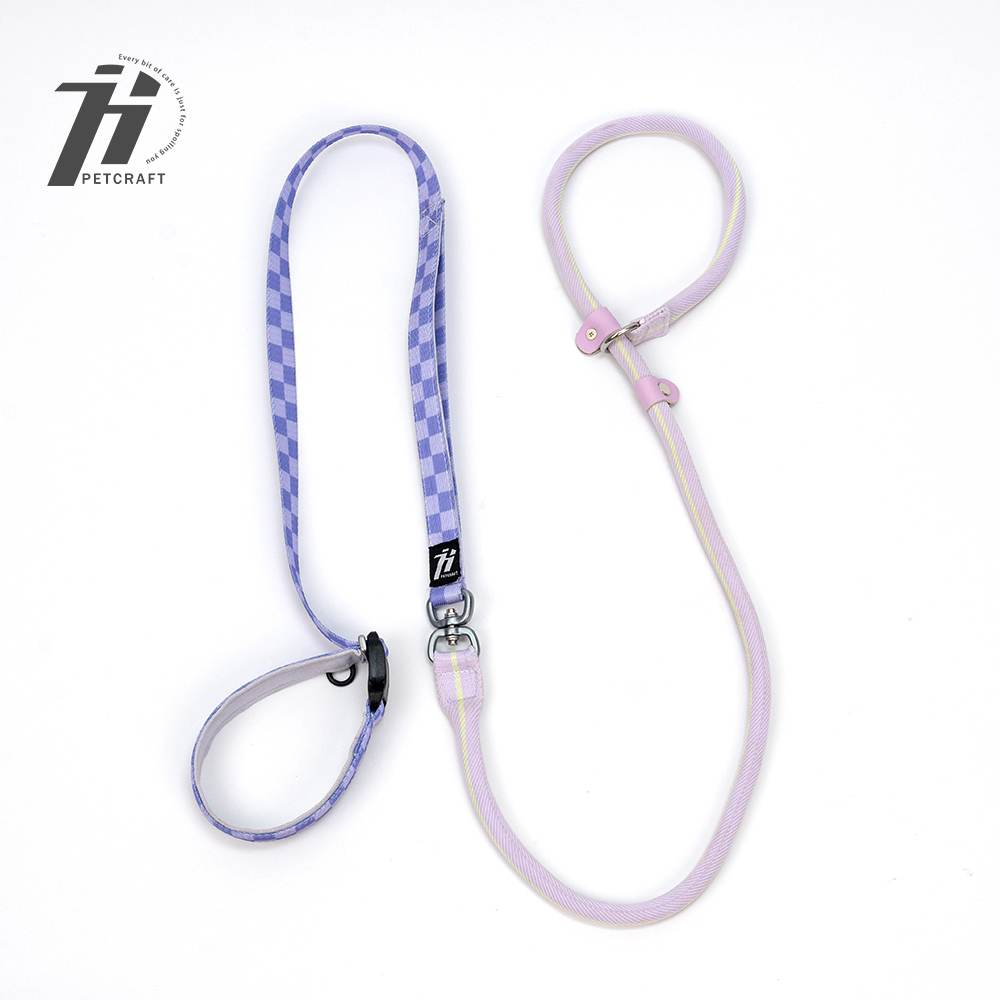
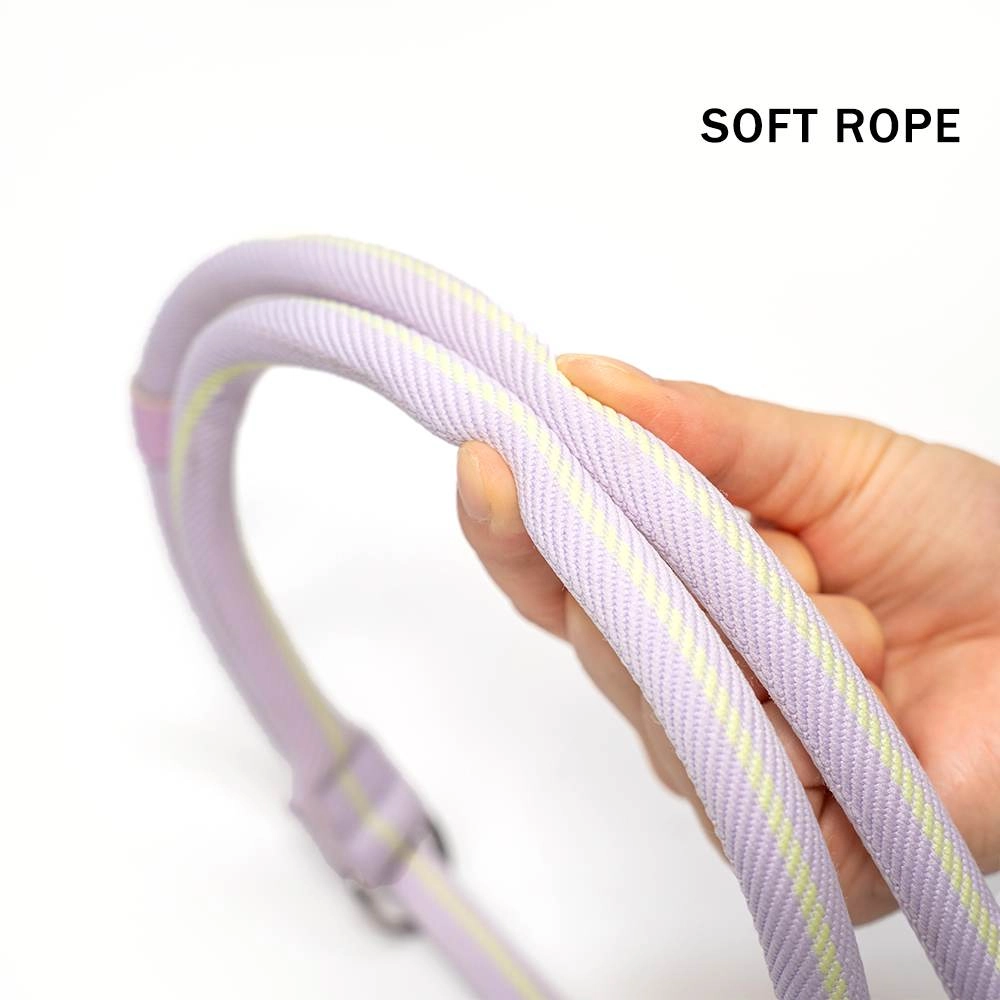
Holydog also has the range of dual-style Rope Leash, with an integrated P-type leash and a variant that has more open-able handle. The opening-handle version contains sponge lining within the handle. The range is designed for small to medium dogs (1–20 kg) and is not intended for dogs above 20 kg.
Discuss packaging after you sample the chosen version. If the design is the closed-handle type, ask for the specific fitting and usage instructions. For an opening handle, reflect in the sample assessment for opening: closing and closure security. Unless separately reviewed and designated as safe, do not include unattended tethering in the intended use.
Go through Holydog dog leash designs to shortlist a construction, then name the exact model in your sample request. Photos are fine for framing the conversation, but the final dimensions and hardware description need to be confirmed in writing.
What do the size labels actually mean?
For the dual-style range: S measures 120 cm with a 0.8 cm rope, M is 150 cm with a 1.0 cm rope, and L keeps the same 150 cm length but moves up to 1.2 cm.
The catalogue notes a manual-measurement tolerance of around 1 to 2 cm. Negotiate production tolerances separately. Ask where the length is measured from, and whether hook and handle are included. Whatever the answer is, put that measuring method in the approval record.
What should dog leash hardware testing cover?
Start with a component description, then move to the assembled product. Ask the supplier to identify each connection that is included in the test specimen and each connection assessed separately.
Does the hook description match the sample?
The Holydog rope range described is manufactured with a 360° rotating alloy hook. Read hardware claims narrowly. An alloy hook is not a stainless steel grade, and it is not a corrosion rating either. If the market you sell into cares about those properties, ask for the exact hardware spec being proposed.
Check the gate closing, swivel movement and visible defects where it interfaces with the rope connection. Ask for the relevant test method and acceptance criteria before interpreting any result. If corrosion testing is requested, state in the test brief the exact hardware finish, exposure method and failure criteria.
Was the complete leash assessed?
Test the finished leash, not just its parts. The sample should be complete: hook attachment, plus rope joins and handle closure where fitted. Settle the loading condition, any conditioning before the test, and what counts as failure (duration, cycles, or break). Ask the supplier to put their test method and rig in writing for your technical review. A headline load number lifted from marketing material proves nothing.
Test load should be kept separate from the dog weight intended. Holydog defines this range for dogs weighing 1–20 kg; the sentence does not provide a breaking-load result. And if your labeling is going to make any load-related claim, insist on real test evidence against that specific sample.
How should branding and handling be approved?
Use the sample meeting to settle everyday handling as well as appearance. Ask reviewers to record observations against the identified version instead of giving only a general “looks good” response.
Where should the logo and accessories go?
A brand logo label is sewn on the outside of Holydog’s described rope range. OEM and ODM options include reflective strips and handle attachments. Bespoke sizing is also available for custom requirements upon approval of the product proposal. Custom measurements are also available for particular needs, depending on the per-product confirmation.
Mark the print area on a sample photo with your private label dog leash artwork size and orientation. Request for any accessory that is being proposed with sample approval. Reapply contact points and joins after making changes to the design instead of signing off on a new feature with nothing more than a digital mock-up.
The opening-handle version adds sponge padding for grip comfort. During the handling review, test the handle with users and conditions relevant to your range: record whether the closure opens and closes as intended, and whether a label or accessory interferes with grip control.
What belongs in the approval record?
This should be a single `dated` entry providing model reference, sample ID, dimensions and measurement technique including measurements for each material description as well as dog leash hardware. Insert files for the authorized design and packaging copy. Include the requested test reports with sample reference (and comments to be resolved prior production). By sample reference, each requested test report is identified adding a comment that it should be performed prior to production.
Where you can, both sides keep an approved reference sample. Then state, in advance, which record wins when the photo, the physical sample and the specification tell three different stories. Settle conflicts before the order releases. Do not leave an inspector to work it out on the dock.
How can sample approval guide the bulk order?
Turn the approval record into purchase-order requirements. Ask the supplier to identify the proposed inspection stages and how changes to materials or components will be communicated.
What manufacturing support does Holydog offer?
Holydog has more than 400 sewing machines and four production lines. Its workforce includes 160 employees, with a six-person design team. The company also has a laboratory and a quality system.
Bring a specific sample brief to Holydog’s OEM and ODM discussion, and ask how construction, approval and your requested inspections will work with these manufacturing and design resources. Do not assume testing is included in your leash order — confirm the scope in writing.
What should you send to start the discussion?
Ask for a conversation regarding leash samples in the style to your liking, intended dog size and height range, logo art work plus target audience of dogs. Insert the needed verifications and any type of labeling assertions you need it to prove in sample proof The request for quotation should distinguish between confirmed specifications, discretionary features and unresolved technical decisions Request specification for confirmed specs optional features and open technical decisions as part of the quote.
Before any reorder, look at every proposed change – hook, closure, rope construction (braided or solid), stitching, accessories. Record who signed off each one, and make the updated sample the new production reference.
Conclusion
Holydog’s dual-style range has fixed size options, an opening-handle variant, a rotating alloy hook, logo labeling and room for customisation. Link your desired building to sample-specific checks and a written record of production so that you can make an informed purchasing decision for your brand. To start that comparison, send Holydog’s contact team the size list and hardware questions you need answered.
FAQs
Q1: Can the 1–20 kg dog range be used as a test-load claim?
A1: Keep the claims separate. The 1–20 kg number describes what dogs this Holydog series were meant to range from. Request a designated end-product test report prior to claiming breaking-load or working-load. Request a verified finished-product test certificate before asserting either a breaking-load or working-would.
Q2: Are M and L different lengths?
A2: Both are listed at 150 cm in the dual-style range. M has a 1.0 cm rope diameter, while L has a 1.2 cm diameter. Confirm the measurement method and production tolerances when approving the sample.
Q3: Can I customize the logo and accessories?
A3: The described range includes a sewn-on exterior logo label, and Holydog supports OEM/ODM accessory and size customisation. Send the exact changes you need and approve a representative sample before confirming the bulk order.